
 Photo: Arne Müseler · CC BY-SA 3.0 de
Salzach Castles & Waterfalls
Follow the Salzach south through Hallein, Werfen, Bad Gastein and Zell am See on a four-day valley circuit.
- Allow
- 4 days
- Route
- 258 km
- Drive time
- 3 hr 49 min
- Stops
- 6
South of Salzburg, the A10 corridor hides a chain of vertical landscapes. Hohenwerfen guards a narrow valley, Eisriesenwelt climbs into the mountain above it, and Bad Gastein stacks Belle Époque buildings around a waterfall before the route returns through Zell am See.
Attractions determine the pace more than distance. Ice-cave visits require walking, a cable car and suitable clothing; gorge and lift access is seasonal. Book one major vertical excursion per day and leave space for weather.
The road, in one glance
Pinch or scroll with Ctrl / ⌘ to zoom
Drawing the route…
The route earns
its distance
Each pin is selected as a place to do something—not merely proof that you passed through.
 Photo: Jorge Franganillo · CC BY 2.0
Salzburg
Begin southbound after breakfast with the Austrian vignette and attraction bookings already sorted.
Salzburg is the fourth-largest city in Austria. In 2026 its population was 157,994. The city lies on the Salzach River, near the border with Germany and at the foot of the Alps mountains.
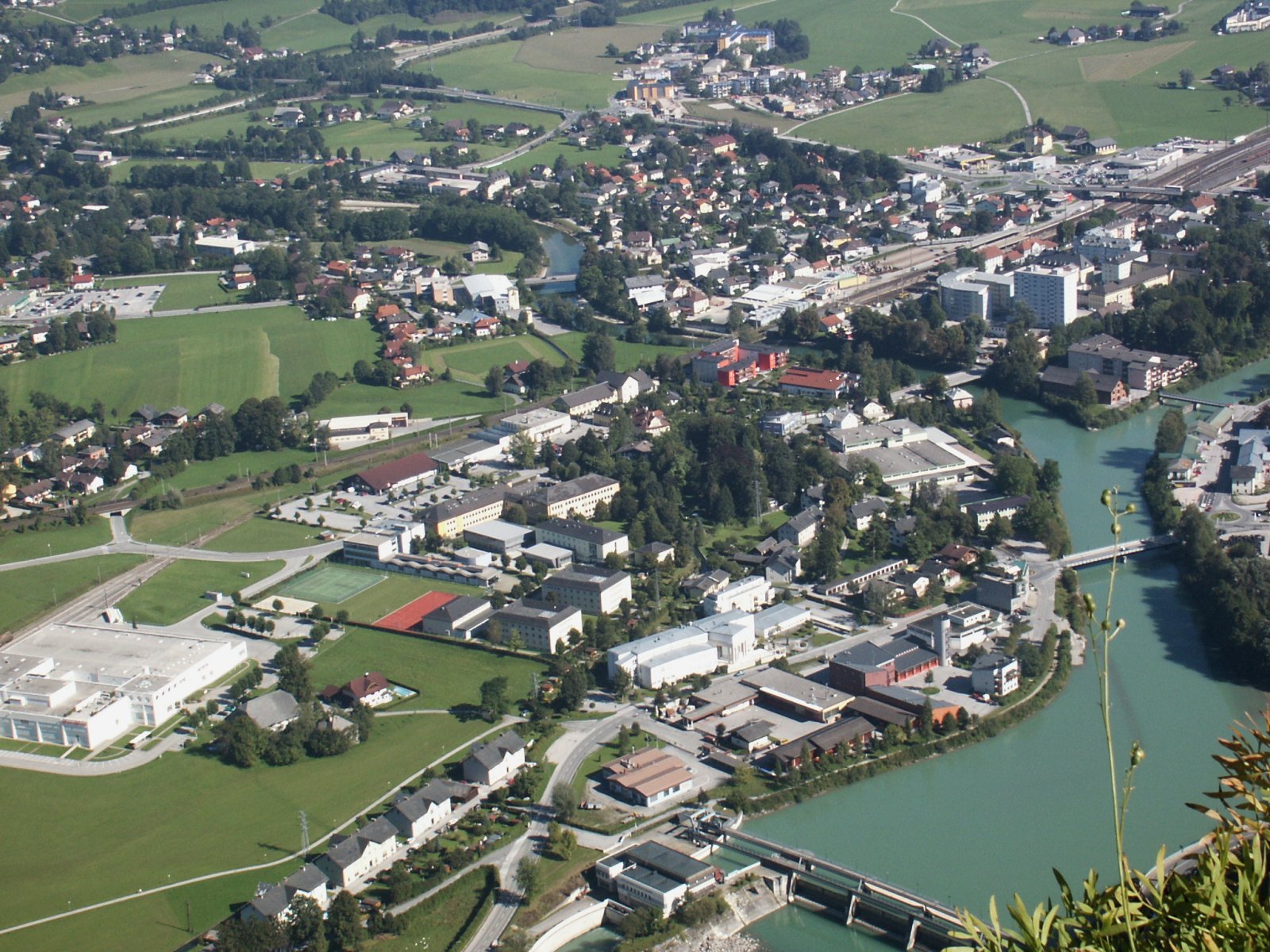 Photo: Wikimedia Commons contributor · Public domain
Hallein & Dürrnberg
Salt shaped Salzburg’s wealth, and Hallein provides the small-town and mine context behind it.
Hallein is a historic town on the Salzach south of Salzburg and the administrative centre of its district. Its old lanes reflect wealth from the Dürrnberg salt mines above town, while the river and Celtic museum add context beyond the mine tour.
Photo: Arne Müseler · CC BY-SA 3.0 deHohenwerfen Castle
A medieval fortress commands a narrow rock-walled section of the Salzach valley.
Hohenwerfen Castle (German: Festung Hohenwerfen, lit. 'Hohenwerfen Fortress') is a medieval rock castle, situated at an altitude of 623 metres (2,044 ft), on a 155-metre (509 ft) rock pillar overlooking the Austrian market town of Werfen in the Salzach valley, approximately 40 kilometres (25 mi) south of Salzburg. The fortress is surrounded by the Berchtesgaden Alps and the adjacent Tennen Mountains.
 Photo: Wikimedia Commons contributor · CC BY-SA 3.0
Eisriesenwelt
The world’s largest ice-cave system is reached through a staged mountain ascent high above Werfen.
The Eisriesenwelt (German for 'World of the Ice Giants') is a natural limestone and ice cave located in Werfen, Austria, about 40 km south of Salzburg. The cave is inside the Hochkogel mountain in the Tennengebirge section of the Alps. It is the largest ice cave in the world, extending more than 42 km and visited by about 200,000 tourists every year.
 Photo: / Zeichner: de:User:Triq · CC BY-SA 3.0
Bad Gastein
Grand hotels rise around a waterfall in a steep spa town unlike anywhere else on the circuit.
Bad Gastein is a spa town in the St. Johann im Pongau District of Austria. Picturesquely situated in a high valley of the Hohe Tauern mountain range, it is known for the Gastein waterfall and a variety of grand hotel buildings.
 Photo: Bestzeller · Public domain
Zell am See
A broad lake and mountain promenade soften the route before its final return north.
Zell am See is the administrative capital of the Zell am See District in the Austrian state of Salzburg. Located in the Kitzbühel Alps, the town is an important tourist destination due to its ski resorts and shoreline on Lake Zell. While Zell am See has been a favoured winter and summer resort for the European aristocracy since the 19th century, it is known as a hub of the international jet set today.
Drive the conditions,
not the itinerary.
Motorway toll rules and mountain attraction seasons apply. Never combine a strenuous cave visit with a fatigued late-night drive.
Checked against
the people who run it
Distances and driving times are planning estimates. Conditions, closures, ferries, permits and park rules can change, so check the linked official guidance before setting out.