 Itineraries
Salzburg Itineraries
Ready-made Salzburg trip plans for one to four days, weekends, couples, families, music lovers, Festival-goers and Christmas-market visitors — each built outward from the river so you walk smart and never backtrack.

Photo: yeojin yun / Unsplash · Unsplash License
- ✓Salzburg's centre is small enough to plan tightly without feeling rushed — most days are walkable, with one funicular ride and the odd bus.
- ✓One focused day covers the left-bank stage: Domplatz, the Residenz, the fortress and St Peter's, with Mirabell at the start or finish.
- ✓Two days add the right bank and a lighter Sound of Music or Hellbrunn afternoon; three days buy a lake or Bavaria day trip.
- ✓Four days let the city breathe — museums, neighbourhoods, concerts and two day trips without a forced march.
- ✓Festival (late July–August) and Advent (mid-November onward) rewrite the rhythm of every day, from hotel prices to where you can walk.
Compact, without feeling rushed
Salzburg is one of those rare cities you can plan tightly and still enjoy slowly. The UNESCO Old Town sits inside a tight loop of the Salzach, the fortress crowns it, and the right-bank gardens and Mozart houses are a few minutes' walk across a bridge. That compactness is the secret to a good itinerary here: you build outward from the river rather than darting across town, and you let the sights cluster by bank rather than by a checklist.
These plans scale from a single, well-judged day to an unhurried long weekend, and there are themed versions for couples, families, music lovers, Festival-goers and Christmas-market visitors. Every one is a planning sketch rather than a timetable — treat opening hours, ticket prices and bus routes as things to confirm on the day, and verify locally rather than trust a fixed schedule. If you are still deciding what to prioritise, start with the things-to-do hub and come back here to string the sights together.


How to choose: time, pace and season
Pick your plan on three axes. The first is simply how long you have: the day-count ladder below tells you what genuinely fits without rushing. The second is your pace — a fortress, a palace garden and two museums in a day is comfortable for some and exhausting for others, so be honest about whether you want to tick or to linger. The third, and the one most people underestimate, is the season. In high summer the Festival fills the squares and the hotels; in Advent the Christmas markets reshape Residenzplatz and the Domplatz; in the shoulder weeks you get the city closer to itself.
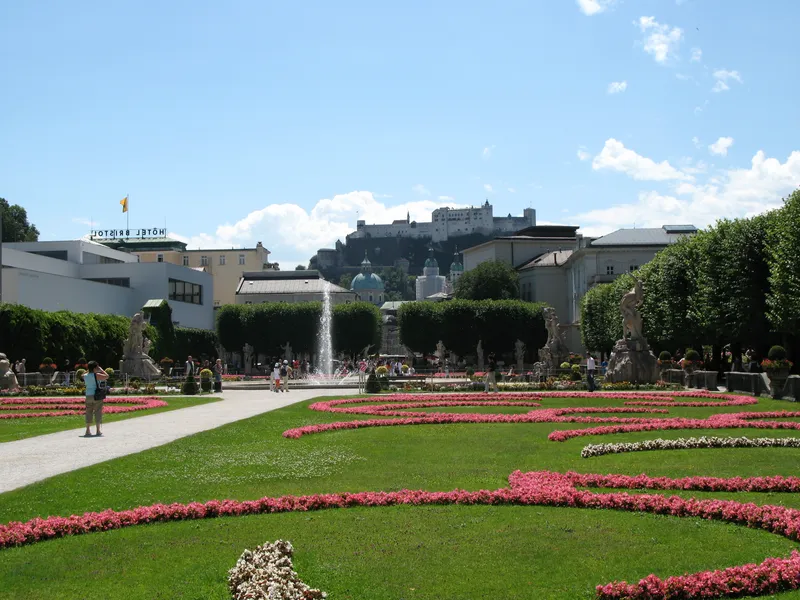
A few constants hold across every plan. Mirabell Gardens is loveliest and emptiest at opening time, so it makes a perfect first or last stop. The fortress is the one sight almost everyone climbs — ride the Festungsbahn up and walk down, or the reverse. And the Old Town's churches, squares and river paths are free, which means even a tight budget buys a beautiful day. Build those fixed points in first, then slot the ticketed sights around them.
- Short on time: do fewer things slowly. One unhurried morning beats three rushed sights.
- Mornings belong to the headline sights and gardens; late afternoon to viewpoints and the river.
- Check the Salzburg Card maths against your list — it bundles admissions and the funicular, but only pays off if you visit enough.
- In Festival or Advent season, book restaurants and concerts ahead and pad your timings for crowds.


The day-count ladder: one to four days
Most visitors come for somewhere between a single day and a long weekend, and Salzburg repays each length differently. A day is enough for the essential left-bank stage and a taste of the gardens. Two days let you cross to the right bank properly and add either Hellbrunn or a Sound of Music afternoon. Three days unlock a day trip — a Salzkammergut lake, the Eagle's Nest, or Hallstatt — without robbing the city. Four days give you the museums, the quieter neighbourhoods and a second excursion, all at a human pace.
Each plan below has its own full page with a step-by-step route, an at-a-glance facts card and timing notes. Read them in sequence if you are still settling on a length: the two-day plan picks up where the one-day plan ends, the three-day plan adds the excursion, and the four-day plan slows everything down.
- One day — the focused first-timer route: Old Town squares, fortress, a Mozart sight and Mirabell.
- Two days — adds the right bank, Hellbrunn or Sound of Music, and a proper sit-down dinner.
- Three days — same core plus one lake or Bavaria day trip and an evening concert.
- Four days — museums, neighbourhoods, a Sound of Music morning and two day-trip options.


Themed trips: couples, families, music and budget
Beyond the day counts, Salzburg suits a few clear travel styles, and the city quietly bends to each. Couples get the gardens at dawn, the love-lock bridge, candlelit beer-cellar dinners and a fortress or Mirabell concert. Families get the trick fountains at Hellbrunn, the funicular, the science museum and a zoo on the same southern bus line. Music lovers can spend whole days on Mozart's two houses, the concert formats and the Festival or Mozart Week. And budget travellers do well here, because so much of the best of Salzburg — the squares, the churches, the river paths, the viewpoints — costs nothing.
The themed pages weave the headline sights into a different rhythm rather than a different map. A Sound of Music day, for instance, still starts at Mirabell, but pushes on to Nonnberg, the Leopoldskron lake view and the Hellbrunn gazebo. Use these when you know your trip has a centre of gravity — romance, kids, music or a tight budget — and let the day-count plans handle the scaffolding.


Day trips and seasons that change the plan
The moment you have three days or more, the Salzkammergut and Bavaria come into play, and a Salzburg trip becomes part-Alpine. Hallstatt is the headline lake village; the lakes around it reward a slower loop; the Eagle's Nest and Berchtesgaden sit just over the German border; and Königssee, Werfen's ice caves and the Untersberg cable car are dramatic alternatives. Many are reachable by train or bus for non-drivers — the day-trips hub sorts out which need a tour and which you can do under your own steam.
Season is the other lever. Time a trip to the Festival and the city becomes a stage; come in Advent and the markets and Advent music take over; arrive in spring for the gardens and comfortable walking; or choose January's quieter Mozart Week. Each shifts what you book, how the days run and how much you pay to sleep. Cross-check the by-month and events hubs before you lock your dates, then pick the day-count plan that matches your time on the ground.
- Add a lake or Bavaria day only once the city core is covered — usually day three.
- Festival season: book hotels and concerts far ahead; expect peak prices and packed squares.
- Advent: the Christkindlmarkt and Advent concerts reshape the evenings — lean into them.
- Shoulder weeks (late spring, early autumn): the best balance of weather, light and calm.