 Neighborhoods
Salzburg Neighborhoods
A traveler-focused guide to Salzburg's areas — the Altstadt, Neustadt and Mirabell, the right-bank lanes, the station quarters, the quiet residential slopes and the lake-edge calm of Leopoldskron.

Photo: Uoaei1 / Wikimedia Commons · CC BY-SA 4.0
- ✓Salzburg is split by the Salzach: the left-bank Altstadt holds the headline sights, the right-bank Neustadt holds Mirabell and the Mozart Residence.
- ✓The whole historic core is small — most areas are a 10–20 minute walk apart, and the two banks meet at the Makartsteg footbridge.
- ✓Where you stay mainly trades atmosphere for convenience: cobbles and crowds in the Old Town, calmer and station-linked around Mirabell.
- ✓Quieter bases — Nonntal, Riedenburg, Mülln — sit minutes from the centre but feel residential and local.
- ✓Leopoldskron and the Hellbrunn side trade walkability for lake views, gardens and Sound of Music calm.
How Salzburg is laid out
Salzburg is one of the most legible cities in Europe to find your way around, because its geography does the work for you. The Salzach river curves through the centre, dividing the city into two banks; the hills — the Festungsberg with its fortress, the Mönchsberg ridge and the Kapuzinerberg opposite — wall the old core in on almost every side. Almost everything a visitor wants sits inside that bowl, and the two historic halves are barely a five-minute walk apart across the river.
On the left (south) bank lies the Altstadt, the UNESCO Old Town of marble squares, churches and the famous Getreidegasse, all beneath the fortress. On the right (north) bank is the Neustadt — confusingly also old, but newer than the Altstadt — built around the Mirabell palace and gardens, the Mozart Residence and the shopping lane of Linzergasse. Beyond this twin core spread the residential quarters: Nonntal and Riedenburg under the fortress slopes, Mülln by the river, the Andräviertel and station districts to the north, and the green, lake-fringed edges at Leopoldskron and Hellbrunn to the south.


Altstadt: the postcard core
The Altstadt is the Salzburg of every photograph — a tight grid of Baroque squares, church domes and shop-lined lanes folded into a bend of the river beneath Hohensalzburg. Domplatz, Residenzplatz and Mozartplatz form its ceremonial heart; Getreidegasse, with Mozart's Birthplace at No. 9 and its forest of wrought-iron guild signs, is its famous shopping canyon. St Peter's Abbey and its rock-cut catacombs, the DomQuartier museum circuit and the cathedral all sit within a few minutes of each other.
Staying or basing yourself here means stepping straight out into the sights, which is glorious in the early morning and the blue hour and demanding at midday when the coach groups and, in summer, the Festival crowds arrive. It is the most atmospheric and the least practical: largely pedestrian, paved in cobbles, with limited car access and steps in many old buildings. For a short, romantic, walk-everywhere trip it is hard to beat; for families with strollers or anyone wary of cobbles, weigh it carefully against the calmer right bank.


Neustadt and Mirabell: the polished right bank
Cross the Makartsteg to the right bank and the mood shifts. The Neustadt around Mirabell is elegant and a little calmer — the formal Baroque parterre of Mirabell Gardens framing the fortress across the river, the Mozart Residence on Makartplatz, the Mozarteum and the Marionette Theater, and broader streets with a steadier flow of locals going about their day. It is central without being in the thick of the Old Town crush, and it is the closest of the desirable areas to the main train station.
For many first-timers this is the sweet spot: you can walk to every Old Town sight in well under fifteen minutes, you have gardens and cafés on your doorstep, and you avoid both the cobbled intensity of the Altstadt and the blandness of the outer districts. It is a particularly good base for arriving by rail, for travellers who want a quieter evening, and for anyone who likes the idea of starting the day with Mirabell almost to themselves before the tour groups.


The right-bank lanes: Linzergasse and the Andräviertel
North and east of Mirabell, the right bank keeps its character without the polish. Linzergasse is the Neustadt's answer to Getreidegasse — an old shopping street of cafés, churches and family shops, softer and less crowded than its left-bank twin, and the natural starting point for the climb up the Kapuzinerberg for a quiet panorama. It links the river to St Sebastian's church and cemetery, where members of the Mozart family are buried.
Further north, around St Andrä's church, the Andräviertel is everyday Salzburg: the open-air Schranne market on Thursdays, neighbourhood cafés and bakeries, independent boutiques and a clutch of practical, station-adjacent hotels. It rarely makes the postcards, which is exactly its appeal — a place to feel the rhythm of a working city minutes from the headline sights, and a sensible value base for travellers who would rather spend on dinner than on a view.


Quiet slopes: Nonntal, Riedenburg and Mülln
Salzburg's quieter residential quarters ring the old core and reward travellers who value calm over a doorstep view. Nonntal sits in the valley behind the fortress, beneath Nonnberg Abbey, with university streets, family restaurants and a settled, local feel — close enough to walk into the Old Town, far enough to sleep in peace. Riedenburg, west of the Mönchsberg, is leafier still, a neighbourhood of villas and gardens with lift or path access up onto the ridge and an easy reach of the Festival halls.
Mülln, hugging the river on the left bank just upstream of the Old Town, is best known for the Augustiner Bräustübl, the great chestnut-shaded beer hall where the beer is poured straight from wooden barrels — but it is also a genuinely pleasant, value-friendly base, with riverside paths and quick Mönchsberg access. None of these areas is glamorous; all of them put you within a ten-to-twenty minute walk of the centre while costing less and feeling more like the real city.


Arrival districts: the station and the airport side
Two practical zones bookend the city for travellers in transit. Around Salzburg Hauptbahnhof, the Elisabeth-Vorstadt is the station quarter — not pretty, but unbeatable for rail arrivals, day-trippers and budget travellers, with a cluster of practical hotels and a short walk or quick bus down to Mirabell and the centre. It is the obvious base if you are hopping out to Hallstatt or Berchtesgaden on day trips, or arriving late and leaving early.
On the western edge, towards the airport, Maxglan and the modern district of Lehen offer airport-adjacent and budget convenience rather than charm. They suit drivers, families needing space and parking, and anyone prioritising price and easy in-and-out over atmosphere. Both are well connected by bus, but you trade the magic of walking home through the Old Town for a more functional stay — a fair deal for some trips, a disappointment for others.


Green edges: Leopoldskron and Hellbrunn
Salzburg's most scenic stays lie at its southern edge, where the city dissolves into water and parkland. Leopoldskron, with its lake-mirrored palace, is the dreamy Sound of Music corner — quiet, residential and beautiful, with lake walks and the fortress reflected across the water, but a bus or taxi ride from the Old Town rather than a stroll. The palace itself is a hotel and seminar centre; the area around it suits travellers wanting calm, romance and a sense of arriving somewhere special each evening.
Further south, the Hellbrunn area wraps around the palace park, the trick fountains and the city zoo, on the cycle-friendly flatlands towards the German border. It is family territory above all — green space, easy biking, and room to spread out — well served by bus but firmly out of walking range of the centre. Both edges reward a deliberate choice: pick them for the setting, not for convenience, and budget time and transport into every day.


At a glance: matching an area to your trip
Use this as a quick decision aid; the detailed neighbourhood and hotel pages carry the nuance. Walking times are approximate from each area to the central squares, on foot, for an able walker.
- Atmosphere and walk-everywhere romance: Altstadt — but expect cobbles, steps and crowds.
- Best all-round first-timer base: Neustadt around Mirabell — central, calmer, near the station.
- Value and local feel: Andräviertel, Mülln or Nonntal — minutes from the centre, gentler prices.
- Rail arrivals and day-trippers: the station quarter (Elisabeth-Vorstadt).
- Drivers, families needing space, airport access: Maxglan or Lehen.
- Setting over convenience: Leopoldskron (lake, romance) or Hellbrunn (family, green) — plan transport.
- Festival-goers: weigh venue walking distance carefully; book far ahead in any area.
Where to eat by neighbourhood
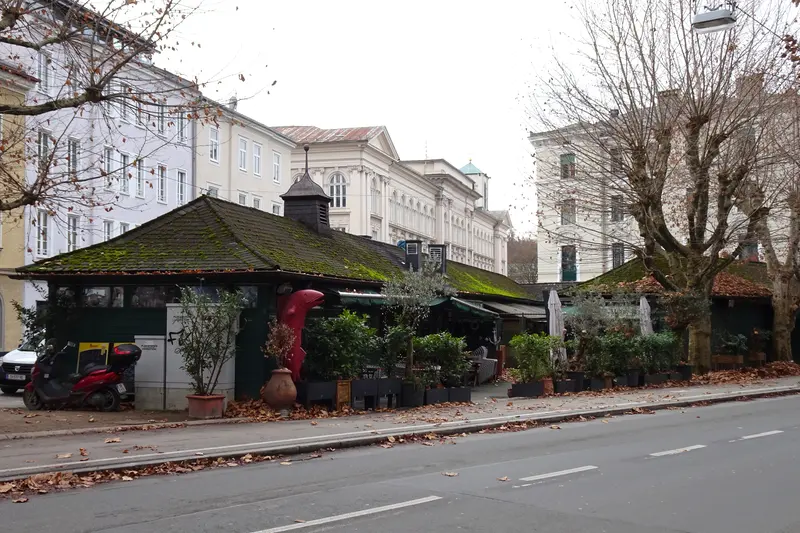
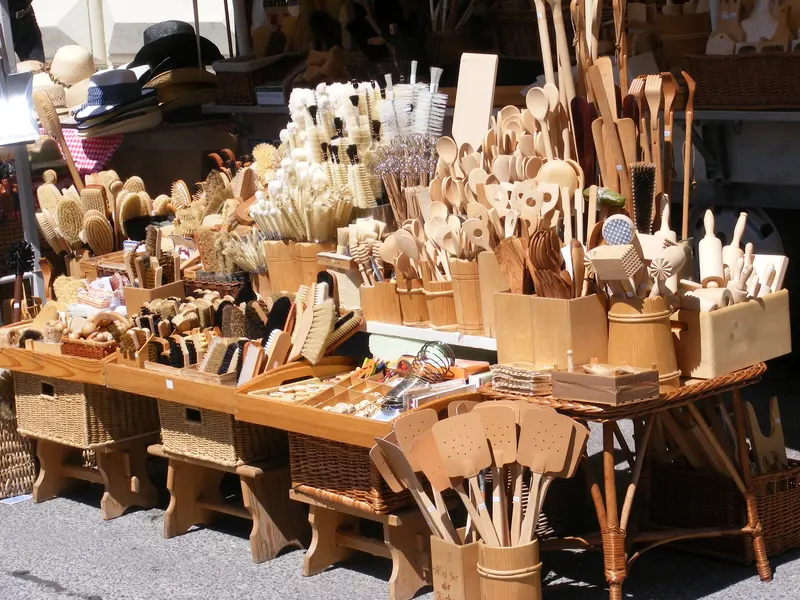
Each of Salzburg's quarters has its own food character, and matching where you eat to where you are saves you both backtracking and tourist-trap prices. In the Altstadt, the headline tables are atmospheric and historic — St Peter Stiftskulinarium inside the abbey walls, the cellars and courtyards off the squares, and the Grünmarkt stalls on Universitätsplatz for a quick, honest bite between sights — but this is also where prices run highest and menus are most tuned to visitors. On the right bank, Linzergasse and the Andräviertel keep things more local: neighbourhood cafés, family-run restaurants and the Thursday Schranne market around St Andrä's church, where Salzburgers actually do their shopping.
The beer-hall tradition has its own geography. Mülln means the Augustiner Bräustübl, the monastery hall where the beer is drawn straight from wooden barrels beneath chestnut trees and you buy your food from stalls; Maxglan, out west, has the Stiegl-Brauwelt at the city's biggest brewery. For coffee and cake, the grand coffeehouses cluster in the Altstadt and just over the river — Café Tomaselli on Alter Markt is the institution, Café Bazar the right-bank classic with its riverside terrace. The quieter residential quarters — Nonntal, Riedenburg — reward you with the kind of unpretentious local restaurants that rarely appear in guidebooks, a good reason to base yourself there if eating like a local matters more than a fortress view.
- Altstadt: historic, atmospheric, priciest — abbey dining, cellars and the Grünmarkt stalls.
- Right-bank lanes: local cafés, family restaurants and the Thursday Schranne market.
- Beer halls: Augustiner Bräustübl in Mülln; Stiegl-Brauwelt in Maxglan.
- Coffeehouses: Café Tomaselli (Altstadt) and Café Bazar (right bank, riverside terrace).
Getting between the neighbourhoods
The single most reassuring fact about choosing a Salzburg base is how little distance separates the areas. The historic core fits inside a loop of the river barely a kilometre across, so the Altstadt, the Neustadt around Mirabell, Linzergasse, Mülln and Nonntal are all within a ten-to-twenty-minute walk of one another and of the central squares — and the two banks are joined by a string of bridges, most usefully the pedestrian Makartsteg. For most visitors staying anywhere in or beside the centre, walking is not just possible but the pleasantest way to move, and the only mechanical help you are likely to need is the Mönchsberg lift, the fortress funicular, or a bus out to Hellbrunn (line 25).
Where transport genuinely matters is the outer ring. Leopoldskron, Hellbrunn, Maxglan, Lehen and the airport side sit beyond comfortable walking range, so a base there means building a daily bus, bike or taxi run into your plans; the city's bus network covers them well, and registered overnight guests now receive a Guest Mobility Ticket for regional public transport that can soften the cost. The flat cycle paths along the Salzach also make a bike a genuinely good way to link the green southern edges with the centre. As ever, confirm current bus routes, lift hours and the guest-ticket scheme locally, since these are periodically reorganised.


Crowds, the Festival and the calendar
One thing reshapes every neighbourhood choice: the calendar. In high summer, and especially during the Salzburg Festival in late July and August, the Old Town swells with crowds, hotel prices climb steeply, and the difference between a central and a quieter base becomes a difference in your daily peace. The same is true, in a gentler key, during Advent, when the Christmas markets on Domplatz and Residenzplatz draw evening throngs into the Altstadt squares.
If you visit in these peaks, a calmer right-bank or residential base can be a relief — you dip into the magic when you want it and retreat to quiet when you don't. In the shoulder seasons, when the city is calmer all over, the case for the atmospheric Old Town strengthens, because you get the squares without the crush. Read the by-month and where-to-stay guides together to time the trip and pick the base that fits the season.