Elisabeth-Vorstadt & Station Area
Train-station convenience, budget and mid-range hotels, arrival logistics and the honest tradeoffs of staying near Salzburg Hauptbahnhof.

Photo: Dr. Reinhard Medicus / Wikimedia Commons · CC BY-SA 3.0
- ✓Elisabeth-Vorstadt is the district around Salzburg Hauptbahnhof, the main railway station, on the right bank north of Mirabell.
- ✓It is the most convenient base for rail arrivals, day-trippers and anyone catching early trains to Hallstatt, Vienna or Munich.
- ✓The Old Town and Mirabell are a flat fifteen-to-twenty-minute walk, or a few minutes by frequent bus.
- ✓Hotels here skew practical and better-value — chains, business hotels and budget stays rather than romantic boutiques.
- ✓It's a workaday quarter, not a pretty one: choose it for logistics, not atmosphere.
At a glance
A quick, honest orientation to the station district before you book a room here — the evergreen facts, with day-of details flagged to confirm.
- Where it is: the right-bank quarter wrapped around Salzburg Hauptbahnhof, north of the Neustadt and Mirabell.
- Best for: rail travellers, early departures, day-trippers and budget-conscious or one-night stays.
- Walk to the centre: about fifteen to twenty flat minutes to Mirabell and on into the Old Town.
- Transport: the main rail hub, plus the city's busiest bus interchange and connections to the airport and region.
- Character: practical and modern, with hotels, offices, shops and traffic rather than Baroque charm.
- Watch for: a few blocks immediately around any big station feel busier and less polished at night — pick your street.
- Verify before you go: current train and airport-bus connections, your hotel's exact distance from the station entrance and from the Old Town.
What the station district is for
Every city has the quarter that exists for arrivals and departures, and in Salzburg that is Elisabeth-Vorstadt, the area around the Hauptbahnhof on the right bank. Be clear-eyed about it: this is not where you come for atmosphere, Baroque squares or romantic dinners. It is where you come for convenience — to roll your suitcase from a platform to a hotel lobby in three minutes, to catch a 7 a.m. train to the lakes without a taxi, or to bank a sensibly priced room when the prettier districts are full or over budget.
On its own terms it does the job very well. Salzburg Hauptbahnhof is a handsomely restored, fully equipped station with shops, food, left luggage and excellent onward connections to Vienna, Munich, Innsbruck and the Salzkammergut. The streets immediately around it are workaday — offices, supermarkets, fast food, the everyday business of a working city — but they are safe, central and superbly connected. The trick is to treat the location as a tool and to set your expectations accordingly.

Getting in and out: arrival logistics
The whole case for staying here is logistics, so it helps to know how the connections work. The Hauptbahnhof is Salzburg's rail gateway, with frequent fast trains east to Vienna, west to Munich and on into Germany, and regional services into the Salzkammergut for lake day trips. It is also the city's principal bus interchange, so reaching the airport, the suburbs or the trailheads for day trips is straightforward from your doorstep. For anyone planning a trip built around rail — multiple day trips, an open-jaw arrival and departure, or onward travel after Salzburg — a station-area base removes a lot of friction.
From the airport on the west side, a city bus connects to the station and centre; confirm the current route and frequency when you arrive, as these are adjusted from time to time. One genuine perk for overnight guests: since 2025, registered visitors staying in the city receive a Guest Mobility Ticket for regional public transport, which makes the buses and regional trains from the Hauptbahnhof even more useful — just don't confuse it with the separate Salzburg Card, which is a sightseeing pass.

Walking to the sights
Despite its workaday feel, the station district is not far from the good stuff. From the Hauptbahnhof it is a flat, easy fifteen to twenty minutes on foot down through the Neustadt to Mirabell Palace and its gardens, and then a few minutes more across the Salzach into the Old Town. The walk is level the whole way — no fortress steps, no Mönchsberg climb — which makes it kinder on legs and luggage than some prettier districts, and the Mirabell stretch is genuinely pleasant once you clear the immediate station blocks.
If you'd rather not walk, frequent buses run between the station and the centre, so the squares are only a few minutes away by public transport. The practical upshot: you sleep somewhere cheap and convenient, and you are still on Mirabell's parterre in under twenty minutes whenever you want to be. For a short city break heavy on sightseeing and day trips, that is often a better trade than paying a premium to sleep among the very crowds you'll spend the day in.


Hotels and the honest tradeoffs
Station areas are where the practical hotels cluster, and Salzburg is no exception. Around the Hauptbahnhof you'll find international chains, reliable business and mid-range hotels, and a good supply of budget rooms and hostels — generally at lower rates than the Old Town or the immediate Mirabell area. For a one-night stop, an early train, a tight budget or a trip dominated by day trips, this is frequently the smart, unsentimental choice.
The tradeoffs are real, though, and worth naming. You give up charm: your morning view is a city street, not a Baroque dome. The blocks closest to any large station are busier and a little rougher around the edges after dark than the genteel centre, so look at exactly which street a hotel is on and read recent reviews for the immediate surroundings. And you'll do a bit more walking or bus-catching to reach the sights. None of that is a dealbreaker — it's just the deal: you're buying convenience and value, not romance. If atmosphere matters more than logistics, base yourself in the Old Town, Nonntal or Mülln instead.

Who should base here — and who shouldn't
Choose Elisabeth-Vorstadt and the station area if your trip is logistics-led: you're arriving and leaving by train, doing several day trips, watching the budget, or staying a single night before moving on. The flat walk to Mirabell, the unbeatable transport links and the better-value rooms add up to a genuinely sensible base, and the Guest Mobility Ticket makes the surrounding region easy to reach. For efficient, sightseeing-and-day-trip-heavy travellers, it can be the best-value foothold in the city.
Skip it if your priority is atmosphere — a first romantic trip, an anniversary, a slow Festival stay where you want to stroll home through lamplit squares. For those, the cobbles and domes of the Old Town, the calm of Nonntal or the riverside character of Mülln will serve you far better, even at a higher price or with a steeper walk. Match the district to the trip, and the station area earns its keep precisely when atmosphere is not what you're paying for.


Eating and everyday needs around the station
One underrated upside of the station district is convenience for the small practical stuff. The Hauptbahnhof itself has food outlets, bakeries, supermarkets and the kind of long opening hours that are a godsend for late arrivals and early departures — handy when you roll in after the Old Town's kitchens have closed, or need breakfast before a dawn train. The surrounding streets add ordinary city amenities: pharmacies, larger supermarkets for self-caterers, everyday shops and a spread of casual restaurants, kebab and pizza places, Asian spots and a few solid Austrian Gasthäuser aimed at locals rather than tourists.
Don't expect a celebrated dining scene — the memorable tables are over in the Old Town and the quieter districts — but for honest, affordable, no-nonsense meals at almost any hour, the station area quietly delivers. Prices run lower than on the squares, portions are generous, and you won't queue. Treat it as the practical larder of your trip: stock up, grab a quick bite between trains, and save the special meals for the centre.
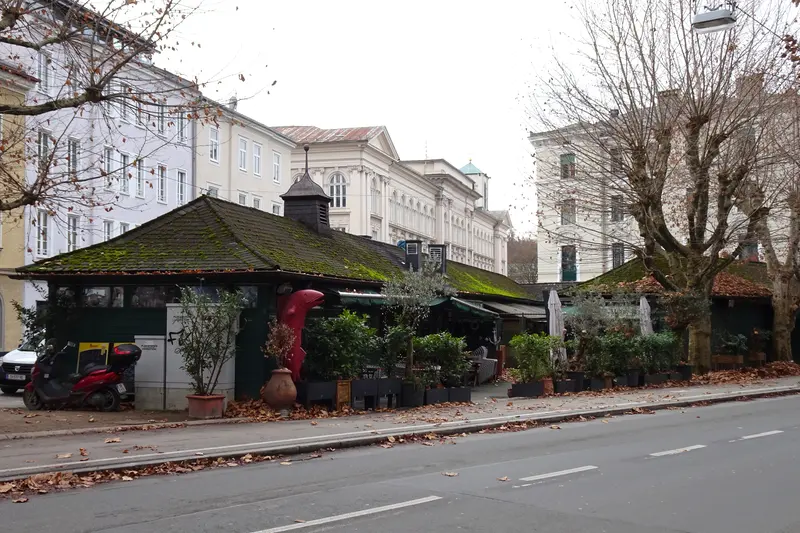
A smart station-based plan
Used deliberately, the station district can shape an efficient, low-stress trip. On arrival, drop your bags — or leave them in the Hauptbahnhof's left luggage if you're early for check-in — and walk the flat fifteen minutes down through the Neustadt to Mirabell and the Old Town, sightseeing your way back. For day trips, the station on your doorstep means you can be on a train to Hallstatt, the Salzkammergut lakes, Werfen or Munich within minutes of waking, and home again by evening with no transfers. That removes the single biggest friction of a day-trip-heavy itinerary.
The same logic helps on the way out: an early flight or train is painless when the platform is three minutes from your bed, and the airport bus runs from the same interchange. Keep your Guest Mobility Ticket handy for the regional connections, confirm the current airport-bus route on arrival, and note that the blocks immediately around the station are at their busiest at commuter hours — pleasant by day, simply quieter and more workaday after dark. Plan around those rhythms and the station area becomes a genuinely shrewd, friction-free base for a Salzburg trip built on rail.


Related guides

Salzburg Hauptbahnhof Guide
How to use Salzburg's main station — arriving and departing, hotels nearby, luggage storage, the Munich and Vienna lines, day-trip departures and the walk into the centre.
Read guide
Hotels Near Salzburg Station
A practical guide to staying near Salzburg Hauptbahnhof — why the station area suits rail arrivals, lake day-trippers and budget travellers, what the walk into the Old Town really involves, and the honest trade-off of value over atmosphere.
Read guide
Salzburg Airport to City Center
How to get from Salzburg Airport (W. A. Mozart) into the Old Town, Mirabell and the station — the city bus, taxis, transfers and what to expect on arrival.
Read guideMore in Neighborhoods
6
Altstadt Salzburg Guide
The Altstadt as a place to stay and spend time — the Old Town's sights, hotels, restaurants, Christmas markets, Festival crowds and the romantic lanes that reward an early start.
Read guide
Andräviertel Guide
Everyday Salzburg north of Mirabell — the Schranne market, neighbourhood cafés and bakeries, independent boutiques, St Andrä's church and practical, station-adjacent hotels at gentler prices.
Read guide
Hellbrunn Area
Salzburg's leafy south — the palace park and trick fountains, the zoo, flat cycle paths, family-friendly stays and an Advent market, with honest notes on getting in and out.
Read guide
Lehen Guide
Budget stays, modern Salzburg, good transit and riverside routes — and an honest take on when Lehen is practical rather than picturesque.
Read guide
Leopoldskron & Moos
A lake-quiet corner south-west of the Old Town — palace views, reflective water, Sound of Music context, calm stays and the honest bus-versus-taxi tradeoffs of basing yourself here.
Read guide
Linzergasse & Right Bank
The Old Town's calmer half — the right-bank shopping street of Linzergasse, its churches and courtyards, the cafés, the Kapuzinerberg gate and a gentler route away from the Getreidegasse crush.
Read guide