Best beer halls in Salzburg
A guide to Salzburg's beer halls and gardens — from the monastery barrels of the Augustiner to the Stiegl world, the city taverns and the etiquette that ties them together.

Photo: Francisco Galarza / Unsplash
- ✓The Augustiner Bräustübl in Mülln is the headline experience: monastery beer poured from wooden barrels, self-service stone mugs and a vast chestnut beer garden.
- ✓Stiegl is Salzburg's big home brewery; its Stiegl-Brauwelt out in Maxglan adds a museum, tastings and a garden for beer-curious visitors.
- ✓Smaller taverns and Gasthäuser across the Old Town pour Stiegl, Augustiner and regional beers in cosier, table-service settings.
- ✓Beer gardens come alive on warm evenings; the stone halls stay snug and atmospheric in cold or wet weather.
- ✓Self-service and shared tables are the norm at the big halls — knowing the ritual makes the whole thing easier and more fun.
At a glance
A fast comparison of where to drink beer in Salzburg, by mood and format, before you choose. Opening days and hours vary by venue and season — confirm them day-of, especially for the Augustiner, which keeps its own monastic schedule.
- Augustiner Bräustübl (Mülln): biggest and most atmospheric; self-service, barrels, stone mugs, food stalls, huge garden.
- Stiegl-Brauwelt (Maxglan): brewery museum, guided tastings, restaurant and beer garden; a short trip from the centre.
- Old Town taverns and Gasthäuser: cosier, table-service rooms pouring local and regional beers with Austrian food.
- Beer gardens: best on warm evenings; many big venues seat hundreds or thousands under trees.
- Local beers to know: Stiegl, Augustiner (Mülln), and regional brews like Trumer from nearby Obertrum.
- Format: the big halls are self-service and cash-friendly; smaller taverns work like normal restaurants.
- Verify before you go: opening days/hours, whether food is from stalls or a kitchen, and whether cash is preferred.
A brewing city under a fortress
Salzburg's beer culture is older and deeper than its postcards let on. The prince-archbishops grew rich on salt, but the monasteries and breweries that grew up beneath the fortress gave the city a parallel, more democratic tradition: long wooden tables, stone mugs, gardens shaded by chestnut trees, and beer drunk in company rather than ceremony. To this day a Salzburg beer hall is one of the warmest, least pretentious places in the city — somewhere students, families, locals after work and visitors in the know share a bench as equals.
There are two great names to know and a constellation of smaller rooms around them. The Augustiner Bräustübl in Mülln is the monastery beer hall, the most theatrical experience in town. Stiegl is the big independent home brewery, with a dedicated 'beer world' on the city's edge. Between them sit the taverns and Gasthäuser of the Old Town, where you can have a quieter, table-served beer with your Schnitzel. This guide compares them so you can pick by mood — and then sends you to the deeper pages for each.
Augustiner Bräustübl: the monastery beer hall
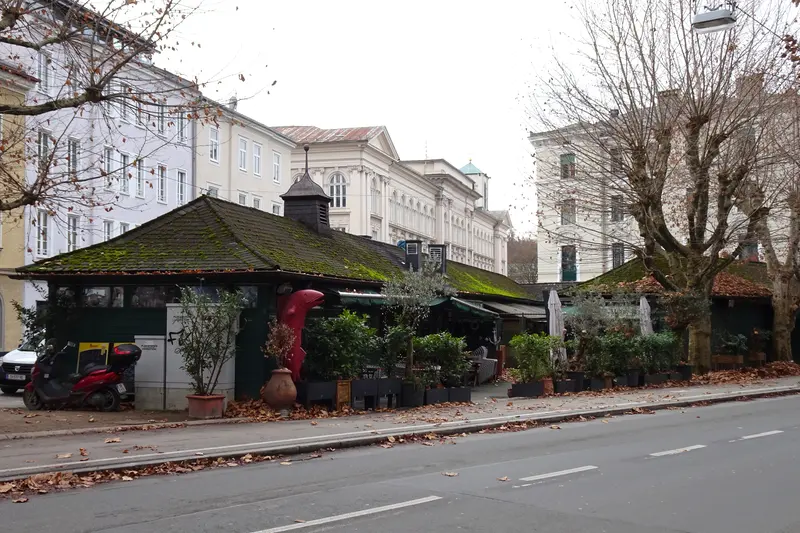
If you do one beer hall in Salzburg, make it the Augustiner Bräustübl in Mülln, just north-west of the Old Town. Founded by Augustinian monks and brewing for centuries, it is one of the largest beer halls in Austria: a warren of vaulted stone halls and, in fine weather, a vast chestnut-shaded beer garden seating thousands. The ritual is the experience — you take a heavy stone Krug from the rack, rinse it under the fountain, pay at the till, and have it filled straight from a wooden barrel, then carry it to a table yourself. There is no table service; food comes from an arcade of independent delicatessen stalls selling pretzels, roast pork, fish and salads onto a tray you assemble.
It is gloriously unpolished and gloriously sociable. On a warm evening the garden hums; on a grey afternoon the stone halls are cosy and atmospheric, lit like a film set. Because it runs on old monastic lines, its hours are particular and can be limited — typically from the afternoon into the evening rather than all day — so check the current schedule before a special trip. For couples it is unexpectedly romantic in a low-key way: a shared bench under the trees, two stone mugs, the city's church bells in the distance.

Stiegl-Brauwelt: the brewery experience
Stiegl is Salzburg's big home-grown brewery — the name you'll see on taps and bottles across the city — and out in the Maxglan district it runs the Stiegl-Brauwelt, a 'beer world' that turns the brand into a half-day visit. Here the draw is structured rather than spontaneous: a brewery museum that walks you through the history and craft of brewing, guided tastings, a shop, and a restaurant with a beer garden where you can settle in for Austrian food and freshly poured Stiegl. It is the option for the genuinely beer-curious, for a rainy afternoon, or for travellers who like a bit of context with their pint.
Unlike the Augustiner, the Brauwelt works more like a normal attraction-plus-restaurant: there's an admission for the museum and tastings, table service in the restaurant, and set opening hours. It sits a little out from the centre in Maxglan, an easy hop by bus or a short ride, which makes it a deliberate outing rather than a stroll from the squares. Pair it with the etiquette page if you want to understand how the local beer culture it celebrates actually plays out at the table.

Taverns, Gasthäuser and beer gardens around the city
Beyond the two big names, Salzburg is full of smaller places to drink beer well. The Old Town and the right bank hold any number of traditional Gasthäuser and taverns — vaulted cellars, wood-panelled rooms, a few outdoor tables — where you can order a beer with table service and pair it with Schnitzel, goulash or a board of cold cuts. These suit a quieter evening, a meal rather than a session, or a cold and wet night when a vast garden holds no appeal. Many pour Stiegl or Augustiner on tap, and you'll also find regional beers such as Trumer, brewed at nearby Obertrum, alongside the big names.
In warm weather, look out for the smaller beer gardens dotted around the city and its edges — courtyards, terraces and garden plots where a few barrels and some benches turn into the best seat in town for a summer evening. They lack the scale and ceremony of the Augustiner, but they trade it for intimacy. Wherever you land, the etiquette is broadly the same family of customs: shared tables are normal, a friendly 'Prost' before the first sip is expected, and tipping is a modest rounding-up rather than a percentage.

How to choose, and how to behave
Choosing comes down to mood and weather. Want the full theatre — barrels, stone mugs, a sea of benches under chestnut trees? Go to the Augustiner, and go in the late afternoon or evening when it comes alive. Want context, a tasting and a sit-down meal? Make the trip to the Stiegl-Brauwelt. Want a quiet beer with dinner, or somewhere cosy on a wet night? Pick an Old Town Gasthaus. For a long summer evening with friends, any of the gardens delivers; for a couple's outing, the Augustiner's benches under the trees are quietly romantic.
Whichever you choose, a few customs smooth the way: at the big halls you serve yourself and pay first, so come with cash and a little patience; shared tables are normal, so ask before sitting and don't be surprised to share yours; and clink glasses with a 'Prost', meeting the other person's eyes, before the first sip. Our dedicated etiquette page covers the whole ritual — ordering, the stone mug, the food stalls and tipping — so you can walk in looking like you've done it before.


Related guides
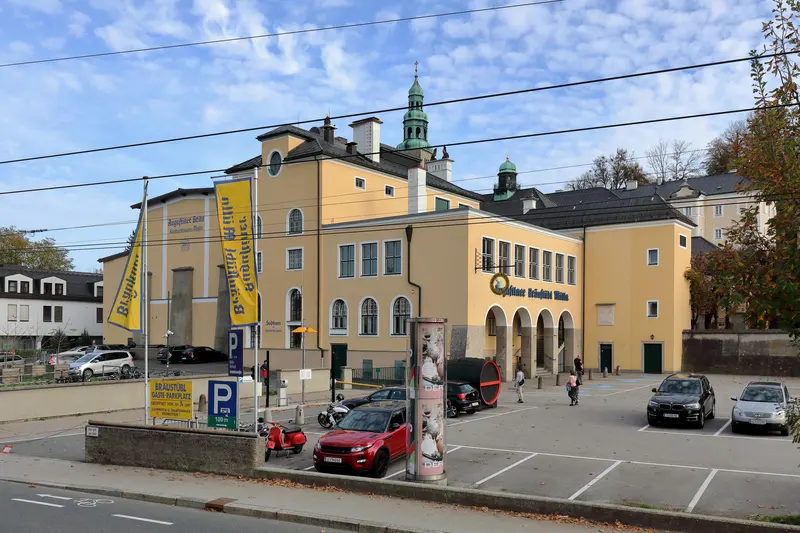
Augustiner Bräu Mülln guide
A full guide to Salzburg's great monastery beer hall — the barrel-poured beer, the stone mug ritual, the food stalls, the chestnut garden, timing and how to do it right.
Read guide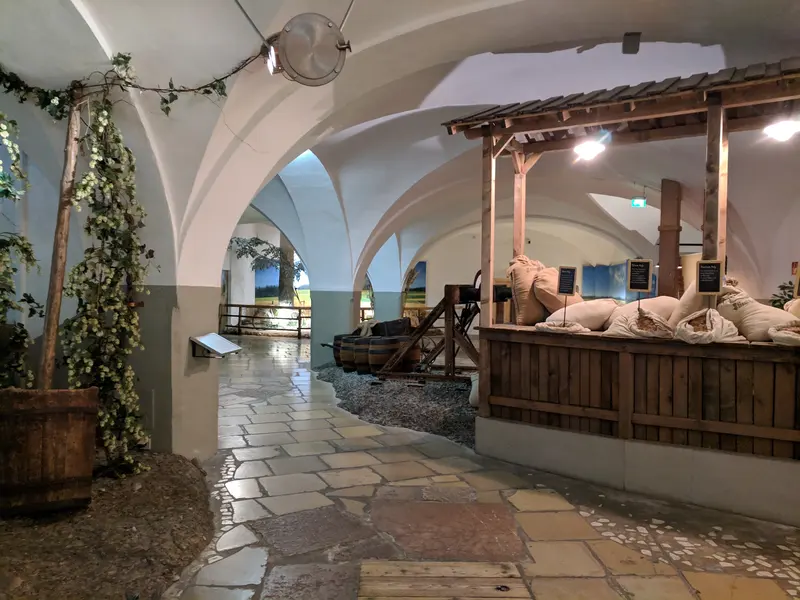
Stiegl-Brauwelt guide
A guide to the Stiegl-Brauwelt in Maxglan — Salzburg's home brewery's museum, tastings, restaurant and beer garden, with logistics and when beer lovers should make the detour.
Read guide
Salzburg beer hall etiquette
How a Salzburg beer hall actually works — ordering, the self-service stone-mug ritual, shared tables, food stalls, the 'Prost' and tipping — so you walk in like a local.
Read guideMore in Food & Drink
6
Best Bars in Salzburg
Where to drink in Salzburg after dark — cocktail bars, wine bars, hotel lounges, beer halls, student nightlife and quiet candlelit corners for a low-key evening.
Read guide
Best Restaurants in Salzburg
A traveller-ready way to choose where to eat in Salzburg — sorted by area, mood and budget, with honest notes on Festival-season demand and when you genuinely need to reserve.
Read guide
Breakfast and brunch in Salzburg
How to start the day in Salzburg — grand coffeehouse breakfasts, hotel buffets, bakery mornings, market stalls and quick meals before an early train or day trip.
Read guide
Budget Eats in Salzburg
Bakeries, market stalls, sausage stands, picnic ideas, casual Austrian lunches and station food — how to eat well in Salzburg without spending much.
Read guide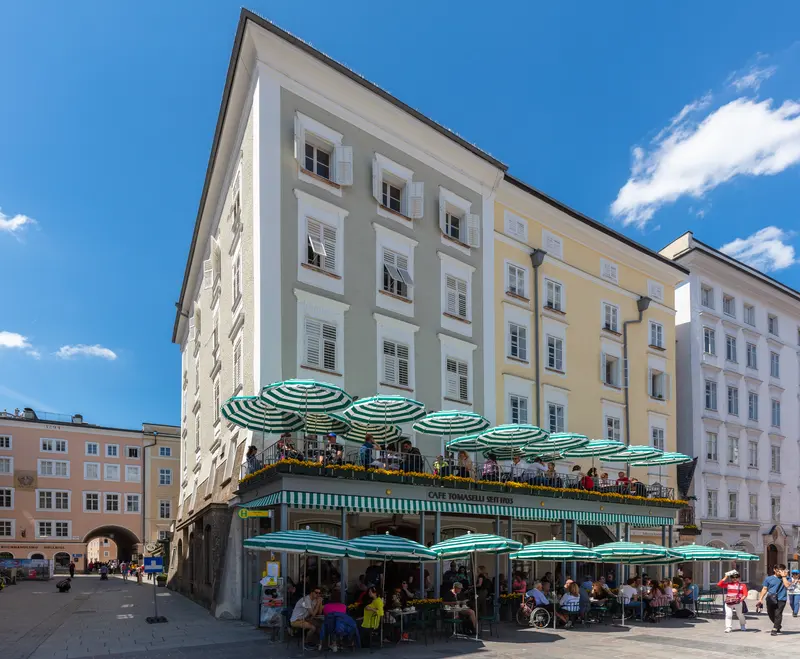
Café Tomaselli: Salzburg's Oldest Coffeehouse
How to visit one of Austria's oldest coffeehouses on the Alter Markt — its history, what to order, the cake tray, the terrace and how to avoid the queues.
Read guide
Family-Friendly Restaurants in Salzburg
Easy, relaxed meals with kids in Salzburg — beer gardens, Old Town spots near the sights, Mirabell and Hellbrunn stops, and what children actually eat here.
Read guide