Budget Eats in Salzburg
Bakeries, market stalls, sausage stands, picnic ideas, casual Austrian lunches and station food — how to eat well in Salzburg without spending much.

Photo: Rich Smith / Unsplash
- ✓Bakeries (Bäckerei) are the budget traveller's best friend — a filled Semmel, a Leberkässemmel or a slice of strudel costs a fraction of a sit-down lunch.
- ✓Sausage stands (Würstelstände) serve Bratwurst, Käsekrainer and Bosna fast, hot and cheap, eaten standing with mustard and a bread roll.
- ✓The Grünmarkt and Schranne markets are the place to assemble a picnic of bread, cheese, cold cuts and fruit for a fraction of restaurant prices.
- ✓Ask for tap water as 'Leitungswasser' and split a Salzburger Nockerl rather than ordering desserts each — small habits that add up.
- ✓Lunch menus (Mittagsmenü) at Gasthäuser are the best-value way to eat a hot, proper Austrian meal.
Salzburg on a budget, without missing the good stuff
Salzburg has a reputation as a pricey city — Festival hotels, grand coffeehouses, palace concerts — and a careless traveller can certainly burn through cash at the table. But the everyday food culture here is generous and democratic, and some of the most satisfying things you can eat cost very little. A hot Leberkässemmel from a bakery, a Bratwurst eaten standing at a market stand, a board of bread and cheese assembled from a market stall and carried up the Mönchsberg for a view: this is real Salzburg eating, not a compromise.
The trick is knowing where locals actually buy lunch, which traps to avoid on the busiest tourist lanes, and how to time your big meal so it costs less. This guide walks through bakeries, sausage stands, markets, picnic ideas, casual hot meals and the small ordering habits that quietly lower the bill. Use it alongside the food-and-drink hub and the budget-itinerary page to keep a whole trip affordable.
At a glance
A quick map to eating cheaply in Salzburg. These notes are evergreen — exact prices and opening hours shift, so treat them as a guide and verify current details locally rather than as fixed figures.
- Cheapest hot bite: a Leberkässemmel (warm meatloaf in a roll) or a filled Semmel from any bakery.
- Fast street food: Bratwurst, Käsekrainer (cheese-filled sausage) or a Bosna (a Salzburg sausage-in-a-bun with onions, curry and mustard) from a Würstelstand.
- Best-value sit-down: the weekday Mittagsmenü (set lunch) at an honest Gasthaus.
- Self-catering: build a picnic at the Grünmarkt, Schranne or a supermarket — bread, cheese, Aufschnitt (cold cuts), fruit.
- To drink cheaply: a Seidl (small 0.3l beer) rather than a Krügel, or ask for Leitungswasser (tap water) — note it can still carry a small charge.
- Bakery chains and supermarket bakeries (Spar, Billa) cover early starts and late station snacks.
- Share the famous sweet: a Salzburger Nockerl is built for two or three, so order one between you.
Bakeries: the everyday budget hero
The Austrian Bäckerei is the single best budget tool in the city. Salzburg's bakeries open early and turn out crusty Semmeln (bread rolls), pretzels, dark Vollkorn loaves and a rotating case of filled rolls and pastries. The classic cheap lunch is a Leberkässemmel — a thick warm slice of Leberkäse (a smooth baked meatloaf) tucked into a fresh roll with mustard, handed over hot. It is hearty, filling and a fraction of any restaurant plate. Look also for Wurstsemmel (cold sausage or ham), cheese rolls, and savoury pastries.
On the sweet side, bakeries are also where you buy strudel, Topfengolatschen (quark-filled pastries), Buchteln and the morning Plundergebäck (Danish-style pastries) without the coffeehouse mark-up. Eat standing or carry it to a bench by the river. Traditional bakeries such as those tied to monastery ovens — including the long-running stone-oven bakery beside St. Peter's — sell loaves and dark sourdough that travel beautifully into a picnic.

Sausage stands and street snacks
The Würstelstand is fast food the Austrian way, and it is honest value. You order a sausage — a grilled Bratwurst, a Käsekrainer oozing melted cheese, a Frankfurter (called a Wiener here) or the smoky Debreziner — and it comes with a Semmel or a slice of dark bread, a smear of sweet or hot mustard, and sometimes ketchup or horseradish. You eat it standing at the counter. It is quick, filling and cheap, and a genuinely local way to break up a day of sightseeing.
Salzburg has its own contribution to street food too: the Bosna, a slim sausage in a fried roll with onions, parsley, curry powder and mustard, said to have been invented in the city in the 1950s. You'll find versions at small stands in and around the Old Town. For something between a snack and a meal, a Leberkäse plate or a Käsekrainer with extra bread does the job. These stands are scattered around the squares and along the main shopping streets — follow the locals at lunchtime.
Markets and the DIY picnic
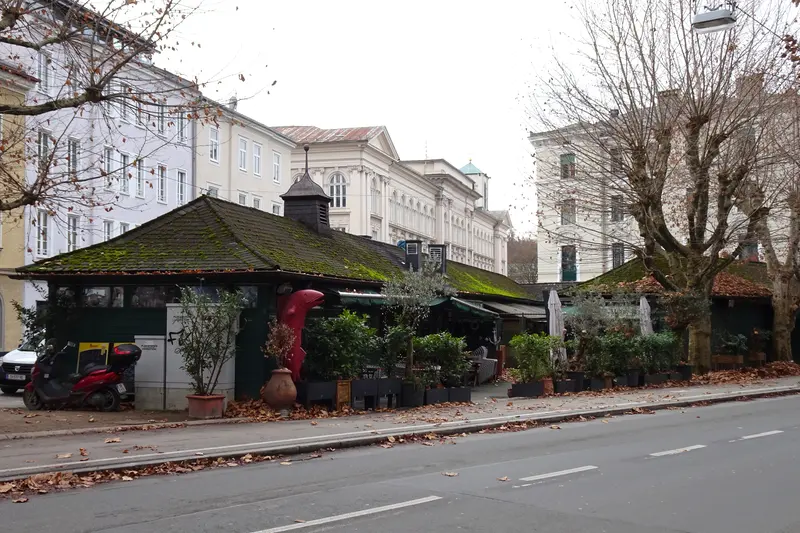
The cheapest way to eat beautifully in Salzburg is to assemble your own meal at a market. The Grünmarkt on Universitätsplatz, in the heart of the Old Town, and the larger Schranne market by the Andräkirche each week are stocked with bread, alpine cheeses, cold cuts, olives, spreads, fruit and ready snacks. Buy a roll, a wedge of mountain cheese, some cured meat and a piece of fruit, and you have a lunch for very little — and a far better one than a mediocre tourist restaurant would give you.
Carry it somewhere with a view: the Mönchsberg terraces, the Kapuzinerberg paths, a bench along the Salzach, or the Mirabell gardens. Supermarkets (Spar, Billa, Hofer) fill the gaps the markets don't, and their in-store bakeries and deli counters are reliable and inexpensive — useful on Sundays and evenings when the markets are closed. A reusable water bottle, refilled from the city's drinking fountains, saves a surprising amount over a trip.
Casual hot meals that don't cost much
When you want a proper hot, sit-down meal without the splurge, two strategies work. The first is the Mittagsmenü — the weekday lunch special posted on a board outside many Gasthäuser, usually a soup or salad plus a main at a set price well below the dinner card. It is how locals eat out at midday, and it's the best value-for-money hot meal in the city. The second is the beer hall: the Augustiner Bräustübl in Mülln lets you carry food in from its market-style stalls and buy beer straight from the barrel, so a filling plate and a half-litre come in cheap, especially shared.
University and student haunts in the Andräviertel and around the campus also keep prices down, and self-service spots, Imbiss counters and Asian or kebab places fill the budget-fast niche if you tire of sausages. Aim your one bigger restaurant meal at lunch rather than dinner, where the same kitchen often charges less, and you'll eat well across a trip without overspending.
Station food, late nights and small money-savers
Salzburg Hauptbahnhof is a quietly useful budget hub: it has bakeries, supermarkets and quick-eat counters that stay open later than most of the Old Town, which matters if you arrive late or need a cheap dinner before a train. Stocking up here for an early day trip — a couple of filled rolls, fruit and water — beats paying tourist prices once you're out at the lakes.
A handful of habits keep the bill honest across the trip. Tap water is fine to drink, so ask for Leitungswasser, though be aware some places add a small charge. Coffee costs less standing at a bakery counter than seated under a coffeehouse chandelier. Tipping is modest — round up or add roughly five to ten percent, handed to the server. And share the showpiece desserts: a Salzburger Nockerl or a big slice of cake is easily split. None of this means missing out; eat one memorable restaurant meal, and fill the rest of the trip with the bakeries, stands and markets that locals use every day.

Related guides

Salzburg on a Budget: A Lower-Cost Itinerary
A lower-cost plan for Salzburg using free walks and viewpoints, smart Salzburg Card decisions, bakery lunches, beer-garden dinners and budget-friendly stays.
Read guide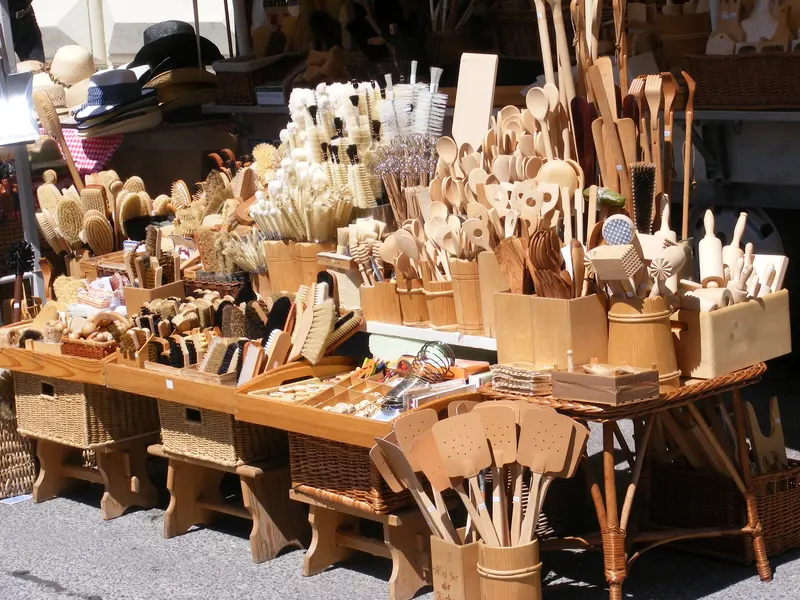
Schranne & Grünmarkt Guide
Salzburg's two food markets — the Grünmarkt in the Old Town and the weekly Schranne by the Andräkirche — for breakfast, produce, cheese, flowers and picnic supplies.
Read guide
Best beer halls in Salzburg
A guide to Salzburg's beer halls and gardens — from the monastery barrels of the Augustiner to the Stiegl world, the city taverns and the etiquette that ties them together.
Read guideMore in Food & Drink
6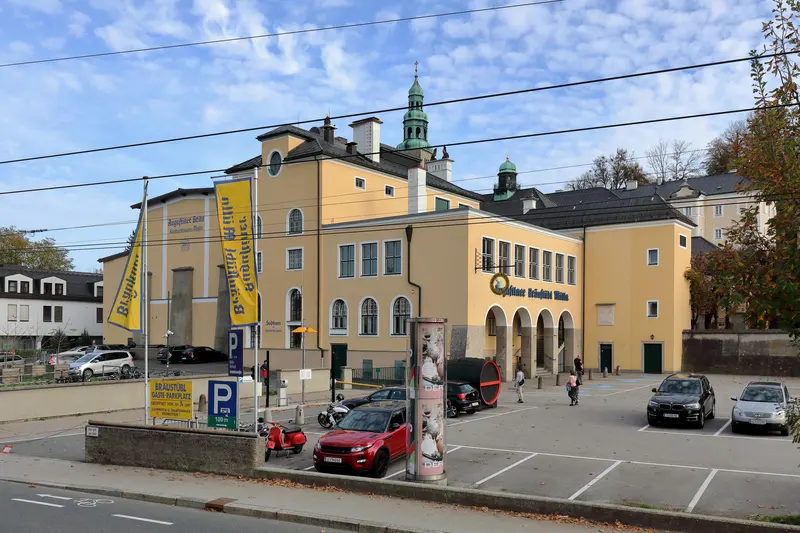
Augustiner Bräu Mülln guide
A full guide to Salzburg's great monastery beer hall — the barrel-poured beer, the stone mug ritual, the food stalls, the chestnut garden, timing and how to do it right.
Read guide
Best Bars in Salzburg
Where to drink in Salzburg after dark — cocktail bars, wine bars, hotel lounges, beer halls, student nightlife and quiet candlelit corners for a low-key evening.
Read guide
Best Restaurants in Salzburg
A traveller-ready way to choose where to eat in Salzburg — sorted by area, mood and budget, with honest notes on Festival-season demand and when you genuinely need to reserve.
Read guide
Breakfast and brunch in Salzburg
How to start the day in Salzburg — grand coffeehouse breakfasts, hotel buffets, bakery mornings, market stalls and quick meals before an early train or day trip.
Read guide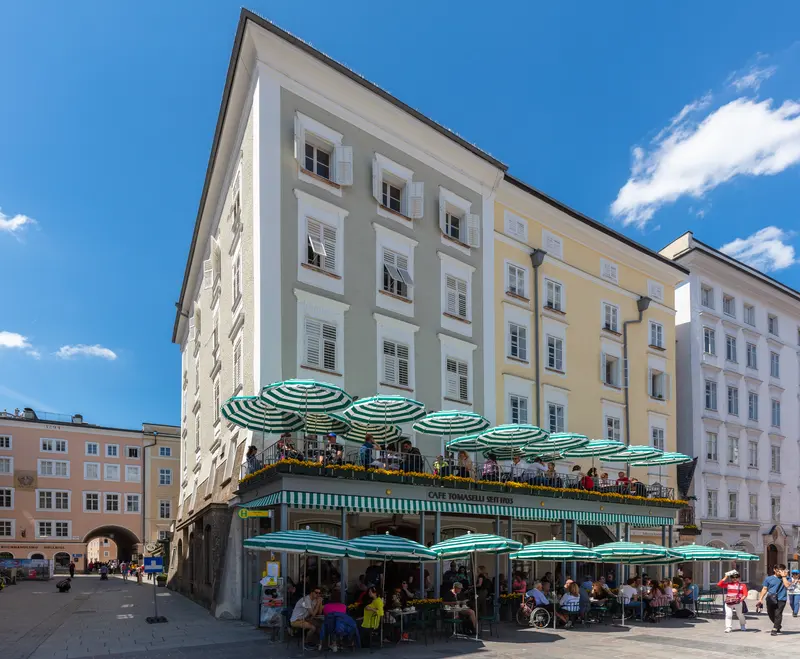
Café Tomaselli: Salzburg's Oldest Coffeehouse
How to visit one of Austria's oldest coffeehouses on the Alter Markt — its history, what to order, the cake tray, the terrace and how to avoid the queues.
Read guide
Family-Friendly Restaurants in Salzburg
Easy, relaxed meals with kids in Salzburg — beer gardens, Old Town spots near the sights, Mirabell and Hellbrunn stops, and what children actually eat here.
Read guide