Salzburg on a Budget: A Lower-Cost Itinerary
A lower-cost plan for Salzburg using free walks and viewpoints, smart Salzburg Card decisions, bakery lunches, beer-garden dinners and budget-friendly stays.

Photo: Olena Zolotukhina / Unsplash · Unsplash License
- ✓Salzburg's best experiences are often free: the UNESCO squares, Mirabell Gardens, the riverside, the church naves and the walk up to the fortress all cost nothing.
- ✓The Salzburg Card only saves money if you'll pack in several paid sights — for a free-leaning trip, skip it and pay per sight.
- ✓Eat like a local on a budget: bakery rolls and supermarket picnics by the river, beer-garden food at the Augustiner, and one shared Salzburger Nockerl as a treat.
- ✓Walk up the fortress hill for free instead of taking the funicular, and ride the Mönchsberg ridge view rather than queueing for the castle.
- ✓Stay just outside the Old Town near the station for lower rates and an easy walk in.
Salzburg doesn't have to be expensive
Salzburg has a reputation as a pricey city — Festival hotels, concert tickets, coffeehouse cake — but a great deal of what makes it special is free or close to it. The UNESCO Old Town is an open-air Baroque stage you can wander for nothing, Mirabell Gardens charges no admission, the church naves are generally free to enter, and the city's defining view costs only a steep walk up the fortress hill. Build a trip around those, and Salzburg becomes surprisingly affordable.
This plan paces two days of lower-cost sightseeing, leaning on free walks and viewpoints, smart ticket choices, and cheap, satisfying ways to eat. It assumes you'll pay for one or two sights you really want rather than everything, and that you'd rather spend on one memorable treat than fritter money on tourist traps. Stretch or trim it freely — the structure matters more than the schedule.
At a glance
A quick orientation before the day-by-day.
- Ideal length: two days of mostly-free sightseeing; add a budget lake day by train if you stay longer.
- Where to stay: near the station or just outside the Old Town for lower rates and an easy walk in.
- Getting around: on foot — the centre is compact, so you rarely need to pay for transport.
- Biggest savings: walk the fortress hill instead of the funicular, picnic by the river, and skip the card if you're going free-leaning.
- One worthwhile splurge: a single concert, or one shared Salzburger Nockerl — choose your treat.
- Two tickets to weigh: the Salzburg Card (only worth it for several paid sights) and the Guest Mobility Ticket overnight guests usually receive for regional transport.
Should you buy the Salzburg Card?
For budget travellers, the Salzburg Card is a genuine fork in the road. It bundles one-time admission to many paid sights — the fortress and its funicular, the Mönchsberg lift, the Mozart houses, the DomQuartier, Hellbrunn — plus city transport, in 24-, 48- and 72-hour versions. If you'll pack several of those paid attractions into consecutive days, it can save real money and is the budget-smart buy.
But on a free-leaning trip, the card is money wasted. If your plan is mostly squares, gardens, river walks, church naves and a self-guided Old Town wander — all free — you'll pay for a card you barely use. The honest test is to list the paid sights you genuinely want, total their separate admissions, and compare with the card price for your stay; verify current prices on the official source. For the trip in this plan, which leans hard on free experiences, skipping the card and paying for a sight or two as you go is usually the cheaper route.


Day 1 — the free Old Town and a walk up the fortress
Spend the first day at street level, where almost everything is free. Walk Getreidegasse early, when the lane of wrought-iron guild signs is quiet, and slip through the Durchhäuser into the hidden courtyards behind the shopfronts. Cross the chain of squares — Domplatz, Residenzplatz with its great Baroque fountain, Mozartplatz — all open and free to wander. Step into Salzburg Cathedral, where Mozart was baptised; the nave is generally free to enter, as is St. Peter's Abbey with its atmospheric wrought-iron churchyard.
For the city's defining view without the funicular fare, walk up the cobbled path to Hohensalzburg Fortress — it's steep but free, and the climb itself is scenic. You can enjoy the ramparts and the panorama over the basin without necessarily paying for full interior admission, though check what the walk-up access includes. The fortress is one of the largest fully preserved castles in Central Europe, never taken by siege; even from outside the paid areas, the view is the one you came for.

Day 1 — eating cheap and well
Salzburg eats well on a budget if you know where to look. For lunch, a bakery (Bäckerei) roll or a stand-up snack at the market by the river costs a fraction of a sit-down meal — assemble a picnic from a supermarket and eat it on the Salzach promenade with the fortress in view, the best free dining room in town. Bosna, the local sausage-in-a-roll, is a famous cheap street bite worth trying.
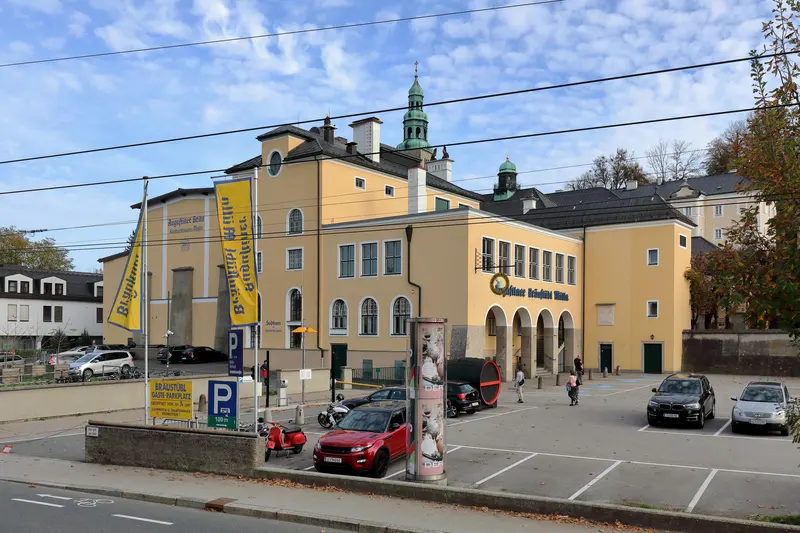
For dinner, the Augustiner Bräustübl in Mülln is the budget traveller's friend: beer poured straight from wooden barrels under chestnut trees, with affordable food from the stalls in its halls and a leafy garden that costs nothing to sit in. It's atmospheric, local and easy on the wallet. Save your one sweet splurge for a shared Salzburger Nockerl — the billowing soufflé shaped like the city's three hills, enormous and meant for the table.

Day 2 — Mirabell, the Mönchsberg ridge and the river
Start day two at Mirabell Gardens, free and beautiful, its central axis framing the fortress across the river — arrive at opening time to have the parterre almost to yourself. The Pegasus Fountain and the terraced steps are the Sound of Music's 'Do-Re-Mi' locations, and the whole garden is yours for nothing. It's the best free half-hour in the city, especially in soft morning light.
For a panorama without the fortress queues or fares, walk up to the Mönchsberg ridge — there's a paid lift, but you can also climb on foot for free via the paths from the Old Town — and follow the panorama trail along the wooded ridge, with the whole Baroque skyline at your feet. Back at river level, the Salzach promenades and the love-lock Makartsteg footbridge complete a day that costs almost nothing. If you fancy a single paid sight, this is the day to choose it — a Mozart house, perhaps, or the DomQuartier.


Stretching the budget further
A few habits keep costs down across the trip. Tap water is fine and free, so skip the bottled-water markup. Coffeehouse cake is a Salzburg ritual but a pricey one — have it once as a treat rather than daily, and choose a neighbourhood café over a tourist-square terrace. Many churches, the squares, the gardens and the river walks are permanently free, so weight your days toward those and pay only for the one or two sights you genuinely care about.
If you stay a third day, a budget day trip is easy: the Salzkammergut lakes are reachable by regional train and bus, and walking the shore of Mondsee or the Wolfgangsee, or swimming in summer, costs nothing once you're there. Overnight guests generally receive a Guest Mobility Ticket for regional transport — verify its scope, as it can make a lake day all but free. Hallstatt is the famous lake village but draws crowds and higher prices; the closer lakes are the budget-friendlier choice.

Practical notes for a budget trip
Where you sleep is the biggest lever on a Salzburg budget. Rates fall as you step out of the Old Town: hostels and budget hotels near the main station or just beyond the centre cost less and are still an easy walk in, since the city is compact and flat along the river. Avoid the Festival fortnight (late July–August) and the Advent markets if money is tight — both push hotel prices to their yearly peak. Spring and early autumn shoulder weeks give you the same city far more cheaply.
Beyond that, the logic is simple. Don't buy the Salzburg Card unless the maths clearly favours it; don't pay for a guided Old Town tour you can do free with a self-guided walk; and don't take the funicular when the walk up the fortress hill is free and scenic. Pack a layer for the Alpine evenings and shoes for cobbles, and you'll have a rich Salzburg trip that spends most of its money on a single memorable treat rather than a string of tickets.
Related guides

Free Things to Do in Salzburg
Old Town walks, churches, gardens, viewpoints, river paths, markets and low-cost Salzburg ideas.
Read guide
Budget Hotels in Salzburg
Value areas, the station trade-offs, hostels, guesthouses and apartments — how to sleep affordably in Salzburg without losing the walk to the Old Town, and how to lower the cost of the whole trip.
Read guide
Salzburg Costs and Budget
Realistic, honest cost planning for a Salzburg trip — how hotels, meals, transport, museums, concerts, Christmas markets and day trips add up, and where to save without missing the magic.
Read guideMore in Itineraries
6
A Weekend in Salzburg
A Friday-to-Sunday plan for Salzburg with hotel-area logic, concert timing, the best viewpoints, where to eat and a soft day-trip choice for Sunday.
Read guide
Four Days in Salzburg
A slower four-day Salzburg plan that adds museums, quieter neighbourhoods, a Sound of Music morning and two day-trip options to the classic city core — paced for travellers who want to live in the city rather than sprint through it.
Read guide
Luxury Salzburg Itinerary
A high-end three-day Salzburg plan built around grand hotels, private guides, fine dining, a chauffeured lake day and concert nights — the city at its most unhurried and elegant, with everything booked ahead.
Read guide
Mozart & Music Itinerary
A music-led day through Salzburg — both Mozart houses, the cathedral and abbey where he played, the Mozarteum and Marionette Theater, and an evening concert chosen by setting, not just programme.
Read guide
One Day in Salzburg
A realistic, walkable one-day route through Salzburg — the Old Town squares, the fortress, a Mozart sight, Getreidegasse and Mirabell at golden hour — paced so you actually enjoy it rather than sprint.
Read guide
Salzburg Christmas Market Itinerary
A festive Salzburg plan for the Advent season — the Christkindlmarkt on the cathedral squares, smaller side markets, Advent music, warm coffeehouses, a candlelit Hellbrunn evening and the best floodlit viewpoints.
Read guide