Four Days in Salzburg
A slower four-day Salzburg plan that adds museums, quieter neighbourhoods, a Sound of Music morning and two day-trip options to the classic city core — paced for travellers who want to live in the city rather than sprint through it.

Photo: yeojin yun / Unsplash · Unsplash License
- ✓Four days let Salzburg breathe — the city core, its museums and neighbourhoods, and two day trips at a human pace.
- ✓Days one and two cover the Old Town, the fortress, the gardens and Mozart, as in the shorter plans.
- ✓Day three is a Sound of Music morning plus a museum or neighbourhood afternoon; day four is a second excursion.
- ✓Two day trips — say a Salzkammergut lake and the Eagle's Nest, or Hallstatt and Werfen — become possible without rushing.
- ✓Build in a concert, a long lunch and a slow café morning; the extra time is for depth, not more boxes.
Four days: depth, not just more sights
Four days in Salzburg is a luxury most visitors don't take, which is exactly why it is so rewarding. With the headline sights handled across the first two days, the back half of the trip becomes about depth: the museums you'd otherwise skip, the quieter neighbourhoods on the right bank and along the river, a proper Sound of Music morning, and a second day trip into the Alps. The city stops being a checklist and starts being a place you briefly live in — long lunches, an evening concert, a slow café morning watching the square wake up.
The plan below front-loads the essentials and then deliberately eases off. As always, the timings, prices and transport are a planning sketch to confirm on the day — verify locally rather than trust a fixed schedule. If a museum or a day trip doesn't suit your group, swap in a neighbourhood wander or a second lake; with four days you have the slack to improvise.
Days one and two — the city core
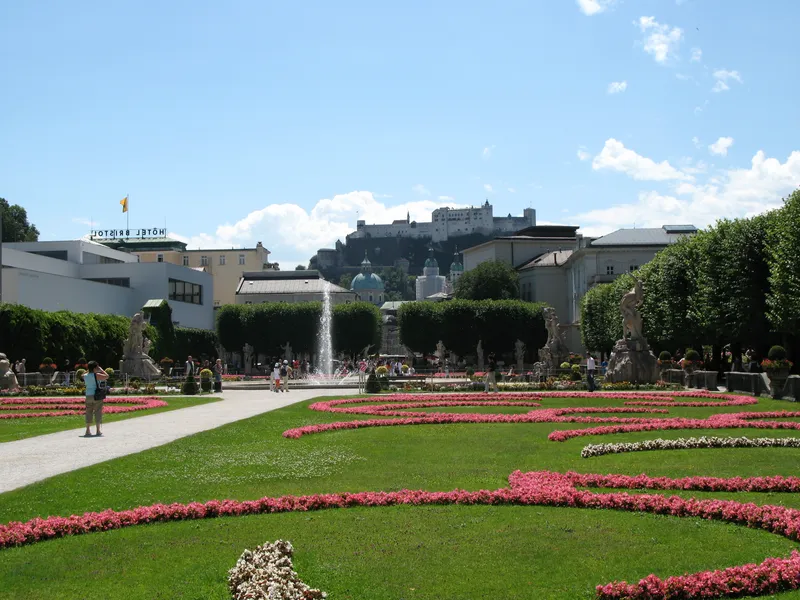
The first two days follow the well-worn city route. Day one is the left-bank stage: Domplatz and Salzburg Cathedral (Mozart's baptism church), Residenzplatz with its great Baroque fountain, Mozartplatz, the atmospheric St Peter's quarter and the funicular up to Hohensalzburg for the definitive panorama. Day two crosses to the right bank for Getreidegasse and Mozart's Birthplace at No. 9, then Mirabell Gardens, with a short Hellbrunn or river afternoon and a beer hall or concert in the evening.
With four days, you can afford to do these two days more slowly than a flying visitor would — lingering in the cathedral, taking the long way round St Peter's, sitting in a coffeehouse without watching the clock. Save the heavier museums and the excursions for days three and four, when the city's surface is already familiar and you can go deeper.


Day three — Sound of Music, museums and neighbourhoods
Give the third morning to The Sound of Music, done properly: Mirabell you'll have seen, so push on to Nonnberg Abbey — the one genuinely real location, a working convent on the fortress shoulder — and the Leopoldskron lake view from the public path, with the Hellbrunn gazebo if you didn't reach it on day two. A guided film loop or a flat bike ride out to the lake palaces both work; pick by how independent you like to be.
Spend the afternoon on the Salzburg the day-trippers miss. The Salzburg Museum and the DomQuartier handle the city's history and art; the Museum der Moderne on the Mönchsberg pairs modern art with one of the best terrace views in town; and the river paths, the Linzergasse on the right bank and the beer-hall quarter at Mülln reward an unhurried wander. This is the day to read the city sideways rather than top-to-bottom.
- Morning: Nonnberg Abbey, the Leopoldskron lake view, and the Hellbrunn gazebo if not yet seen.
- Afternoon: a museum (Salzburg Museum, DomQuartier or Museum der Moderne) and a neighbourhood wander.
- Treat the working convent and the private Leopoldskron palace respectfully — stay on public ground.
- A good rainy-day pivot: the museums carry the afternoon if the weather turns.

Day four — a second day trip
By day four you have earned a second excursion, and you can pick a different flavour from your day-three choice — if the first trip was a lake, make this one a mountain, or vice versa. The combinations that work well: a Salzkammergut lake like Hallstatt one day and the Eagle's Nest with Berchtesgaden the next; or Königssee's emerald water paired with Werfen's ice caves and clifftop fortress. Two contrasting trips give you the full range of the region without repeating yourself.
Keep the logistics honest. A full day trip is a full day, and two in a row is tiring, so build a gentle final evening back in the Old Town — a last riverside walk, the fortress lit against the dusk, a quiet dinner. Non-drivers should confirm which trips run by train or bus and which need an organised tour; the day-trips hub lays out each route. Then leave Salzburg already half-planning the trip back.
- Contrast the two trips: a lake one day, a mountain the next.
- Strong pairings: Hallstatt + Eagle's Nest/Berchtesgaden, or Königssee + Werfen.
- Check train/bus feasibility versus organised tours for non-drivers.
- Keep the last evening soft — a riverside walk and a final dinner in the Old Town.
How to pace four days without burning out
The commonest mistake on a four-day Salzburg trip is treating the extra time as licence to add more — more sights, more trips, more boxes — until the pace is just as frantic as a weekend, only longer. The whole point of the fourth day is the opposite: it buys you slack. Plan only one significant commitment per half-day and let the rest fill itself. A morning that is just the cathedral, a coffeehouse and a slow walk along the Salzach is not a wasted morning in a city this beautiful; it is the reason to come for four days rather than two.
Salzburg's compactness helps. The Altstadt fits inside a loop of the river barely a kilometre across, so almost nothing is more than a fifteen-minute walk from anywhere else in the centre, and you rarely need transport except for Hellbrunn (bus 25), the airport or the day trips. That means you can leave gaps in the plan and trust the city to fill them — a courtyard off Getreidegasse, a church you hadn't meant to enter, the view from the Kapuzinerberg that almost nobody climbs. Build the structure below, then deliberately under-schedule it.
One rhythm that works well over four days: sights in the cool of the morning, a long midday meal, museums or shade in the hot early afternoon, a riverside or hill walk as the light softens, and music or a beer hall in the evening. It mirrors how Salzburgers actually use their own city in summer, and it keeps you out of the worst of the midday crowds on Getreidegasse and in the cathedral square.


Where to eat and drink across the four days
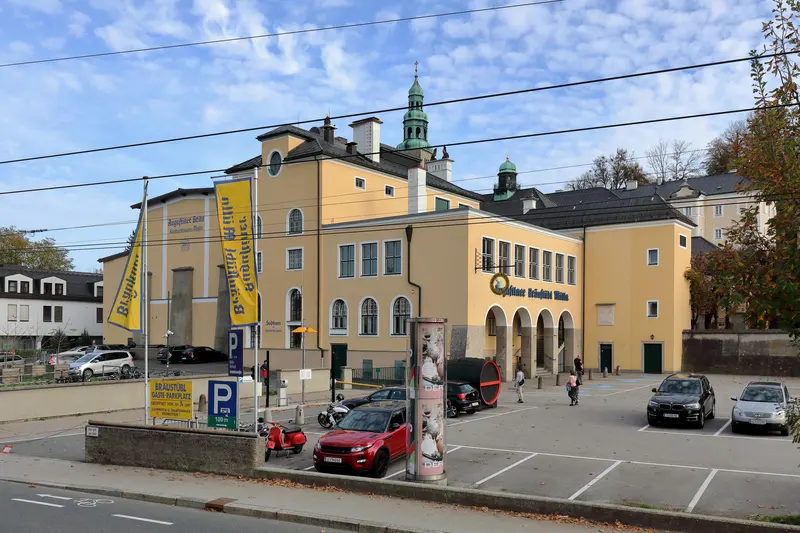
With four days you can eat your way properly through Salzburg's three food traditions rather than grabbing whatever is nearest. The first is the beer hall: the Augustiner Bräustübl in Mülln, run by monks since the late eighteenth century, pours its beer straight from wooden barrels into stone steins you rinse yourself, with a hall of food stalls below leafy chestnut trees — go on a fine evening and treat it as the trip's most relaxed dinner. Stiegl-Brauwelt out toward Maxglan and St Peter Stiftskulinarium, which traces its history back over a thousand years inside the abbey walls, are the other two pillars.
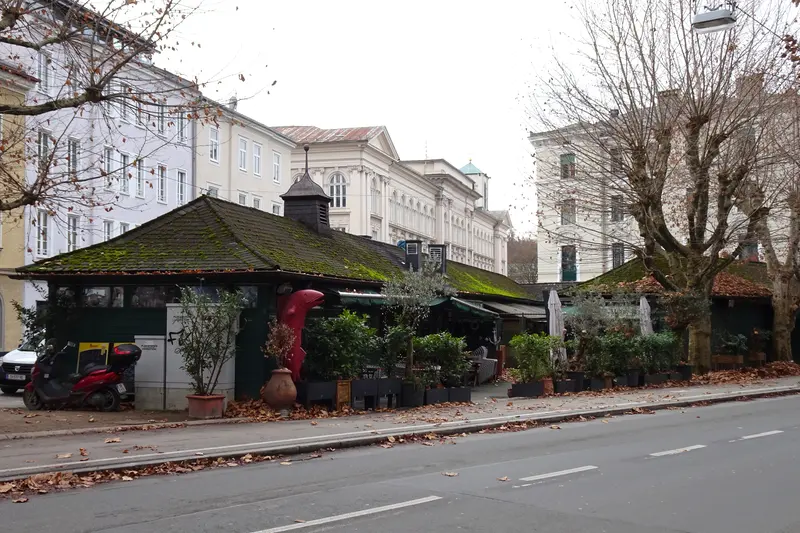
The second tradition is the coffeehouse, and Café Tomaselli on Alter Markt — trading since the early eighteenth century — is the institution: order a Melange, take a slice of cake from the tray a waiter brings to the table, and sit for an hour with a newspaper as locals have for generations. Café Bazar across the river, with its terrace over the Salzach, is the right-bank equivalent. The third is the sweet: try a Salzburger Nockerl once, shared, since the three soufflé peaks meant to mimic the city's hills arrive the size of a small mountain range; and buy a genuine Original Mozartkugel from Fürst, the confectioner that invented it in 1890 and still hand-makes them.
For dinner with a view or a sense of occasion, the M32 restaurant on the Mönchsberg pairs a terrace panorama with the modern-art museum; the cellars and vaulted rooms of the Old Town carry the atmosphere on a wet night; and a Mozart dinner concert at St Peter combines a three-course meal with chamber music in a Baroque hall for travellers who want both in one evening. Reserve anywhere notable in Festival season and over Advent weekends, when the city's tables fill weeks ahead.
- Beer halls: Augustiner Bräustübl (Mülln, barrel-poured), Stiegl-Brauwelt, St Peter Stiftskulinarium.
- Coffeehouses: Café Tomaselli on Alter Markt, Café Bazar on the right bank.
- Sweets: a shared Salzburger Nockerl, and an Original Mozartkugel from Fürst.
- Special evenings: M32 on the Mönchsberg, an Old Town cellar, or a Mozart dinner concert.

Adapting the plan by season
Four days lands very differently depending on when you come, and the plan should bend to the calendar. In high summer, late July into August, the Salzburg Festival takes over the city: opera, drama and concerts fill the Festspielhäuser, Jedermann plays open-air on Domplatz, hotel prices peak and tables vanish — if you are here then, build at least one Festival evening into the four days and book everything far ahead. The flip side is that the long daylight and warm evenings make the slow, late-finishing rhythm above genuinely pleasant.
In Advent, from mid-November, the Christkindlmarkt on Domplatz and Residenzplatz — one of the oldest Christmas markets in the world — reshapes the city around Glühwein, roast chestnuts and craft stalls under the floodlit cathedral, with smaller markets at Mirabell and up at the fortress. A four-day December trip can trade one day trip for a slow market crawl and an Advent concert; the short daylight means earlier starts and cosier, indoor-leaning afternoons. Spring brings the gardens back to life and the Easter Festival; the shoulder weeks of late spring and early autumn give you the city at its most comfortable, with full opening hours and thinner crowds.
Whatever the season, cross-check the by-month guide and the events calendar before you lock the plan: a single Festival premiere, a market opening date or a public holiday closure can be the difference between a smooth day and a frustrating one. The lakes and mountains also keep their own seasons — the Hellbrunn trick fountains run roughly Easter to autumn, and high Alpine day trips depend on the weather more than the date.


At a glance: running four days
A planning sketch, not a timetable. Confirm museum and sight opening hours, the trick-fountain season, concert dates, train and bus times and any Festival closures on the day — verify locally rather than rely on fixed times.
- Day 1: left-bank squares, St Peter's and the fortress.
- Day 2: Getreidegasse, Mozart's Birthplace, Mirabell, a short afternoon and an evening out.
- Day 3: a Sound of Music morning, then a museum and a neighbourhood wander.
- Day 4: a second, contrasting day trip — lake or mountain — and a soft final evening.
- Cost: city squares and gardens are free; fortress, museums, concerts and two day trips are the outlays — verify prices.
- Pace: deliberately slower than the shorter plans; this is time for depth, not more boxes.

Related guides

Salzburg Itineraries
Ready-made Salzburg trip plans for one to four days, weekends, couples, families, music lovers, Festival-goers and Christmas-market visitors — each built outward from the river so you walk smart and never backtrack.
Read guide
Three Days in Salzburg
A three-day Salzburg plan that covers the Old Town and fortress, the right-bank gardens and Mozart, a Hellbrunn or Sound of Music afternoon and one full day trip to the Salzkammergut lakes or Bavaria — with an evening concert to seal it.
Read guide
Day Trips from Salzburg
The hub for the best day trips from Salzburg — Hallstatt, the Salzkammergut lakes, the Eagle's Nest and Berchtesgaden, Königssee, Werfen's ice caves and a hop into Munich.
Read guideMore in Itineraries
6
A Weekend in Salzburg
A Friday-to-Sunday plan for Salzburg with hotel-area logic, concert timing, the best viewpoints, where to eat and a soft day-trip choice for Sunday.
Read guide
Luxury Salzburg Itinerary
A high-end three-day Salzburg plan built around grand hotels, private guides, fine dining, a chauffeured lake day and concert nights — the city at its most unhurried and elegant, with everything booked ahead.
Read guide
Mozart & Music Itinerary
A music-led day through Salzburg — both Mozart houses, the cathedral and abbey where he played, the Mozarteum and Marionette Theater, and an evening concert chosen by setting, not just programme.
Read guide
One Day in Salzburg
A realistic, walkable one-day route through Salzburg — the Old Town squares, the fortress, a Mozart sight, Getreidegasse and Mirabell at golden hour — paced so you actually enjoy it rather than sprint.
Read guide
Salzburg Christmas Market Itinerary
A festive Salzburg plan for the Advent season — the Christkindlmarkt on the cathedral squares, smaller side markets, Advent music, warm coffeehouses, a candlelit Hellbrunn evening and the best floodlit viewpoints.
Read guide
Salzburg Festival Itinerary
How to build a trip around the Salzburg Festival — booking ahead, shaping the day around performances, balancing opera and drama with sightseeing, choosing meals and a hotel, and pacing in rest so the culture lasts.
Read guide