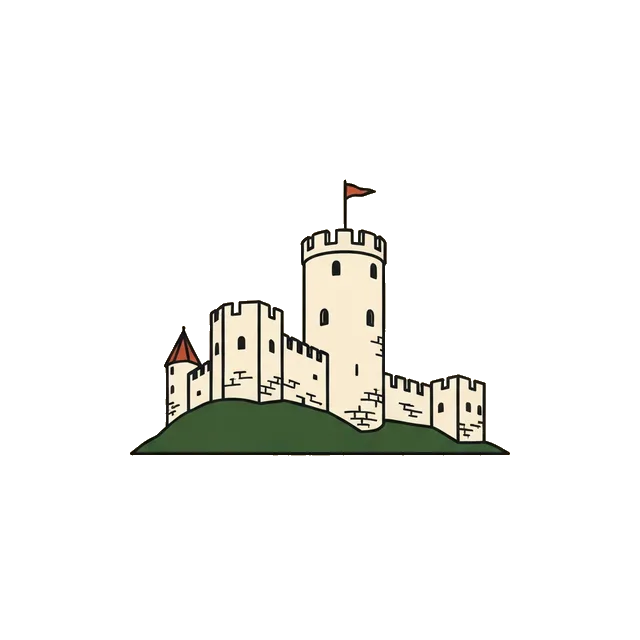
Hohensalzburg Fortress Guide
A practical guide to Hohensalzburg Fortress — tickets, the Festungsbahn funicular, the state rooms and museums, the best viewpoints, timing and Salzburg Card notes for the hilltop castle.

Photo: Sarah Mutter / Unsplash
- ✓One of the largest fully preserved castles in Central Europe — begun in 1077, besieged often, taken never.
- ✓The Festungsbahn funicular climbs from Festungsgasse; walking up the cobbled path is steep but free and scenic.
- ✓Inside are the gilded late-Gothic state rooms (the Golden Hall and Golden Chamber) and several museums.
- ✓The Reckturm watchtower and the ramparts give the definitive panorama over the whole Salzburg basin.
- ✓Check whether the Salzburg Card covers the funicular and admission before you buy a separate ticket.
At a glance
Location: atop the Festungsberg, directly above the Old Town; access via Festungsgasse on the left bank.
Getting up: the Festungsbahn funicular from Festungsgasse, or a steep cobbled footpath (free).
Inside: the late-Gothic state rooms (Golden Hall, Golden Chamber), the Fortress Museum, the Rainer Regiment Museum, the Marionette Museum and the Magic Theatre, plus the Reckturm viewpoint.
Tickets: combination tickets typically include the funicular and the interior exhibits; the Salzburg Card may cover both — verify current pricing and inclusions on the official site before buying.
Time needed: about two hours for the core visit; longer if you do every museum and linger over the views.
Best time: early morning or late afternoon to avoid the mid-day tour crowds.

Why the fortress dominates every Salzburg skyline
Hohensalzburg has loomed over the Altstadt since 1077, when Archbishop Gebhard began it during the Investiture Controversy, and over more than nine centuries it was besieged but, famously, never taken by force — the great Peasants' War siege of 1525 it simply withstood. Its one capitulation came in 1800, when it was handed to Napoleon's advancing French troops without a fight. That record of never falling to assault is precisely why Salzburg still has its medieval and Baroque heart intact — and why the fortress is the one sight almost every visitor climbs to.
Successive prince-archbishops kept enlarging it, and the lavish interiors owe much to Leonhard von Keutschach around 1500, whose Golden Hall and Golden Chamber survive as some of the finest late-Gothic secular rooms in Europe. The result is not a romantic ruin but a vast, complete working castle: courtyards, cisterns, a chapel, store-rooms and battlements, layered over centuries on its narrow ridge.
Getting up: the funicular or the climb
There are two ways up. The Festungsbahn funicular rises from a station on Festungsgasse, deep in the Old Town, and reaches the top in a minute or two — the easy, all-weather choice and a small piece of history itself, as the line has carried visitors up the hill in one form or another since the late nineteenth century. A combination ticket usually bundles the funicular with admission to the interior.
If your knees are willing, the cobbled footpath from Festungsgasse is free, scenic and not especially long — fifteen minutes or so of steady uphill, with views opening as you climb. Many visitors ride up and walk down, which gives the best of both. Note that the walk-up entrance and the funicular may have different ticketing for the interior exhibits, so check before you set off.
Inside: state rooms, museums and the Reckturm view
The interior is more varied than a single castle visit suggests. The Princes' Chambers — the Golden Hall, with its star-studded ceiling and twisted marble columns, and the intimate Golden Chamber — are the artistic highlight. The Fortress Museum traces the castle's building history and daily life; the Rainer Regiment Museum covers the city's military past; and a marionette museum and a small 'Magic Theatre' multimedia tour round out the exhibits, the latter often included on the standard ticket.
But the reason many people come is the view. Climb to the Reckturm watchtower and out onto the ramparts and the whole Salzburg basin opens up: the copper domes and the cathedral directly below, the green sweep of the Mönchsberg, the Salzach threading north, the Mirabell gardens on the far bank, and the Untersberg massif rising on the horizon. It is the single best place to grasp the geography of the city.

Tickets, the Salzburg Card and timing
Pricing and ticket tiers change, so treat the official Hohensalzburg website as the source of truth and verify before you buy. As a rule, the basic combination ticket covers the funicular up and down plus the interior exhibits, while cheaper options cover only the funicular or only walk-up entry — choose by how much of the interior you want to see. The Salzburg Card often includes both the funicular and admission, which can make it worthwhile if you are visiting several paid sights; do the maths against your itinerary.
For timing, the fortress is busiest in the late morning when coach tours and cruise groups converge. Arrive at opening or in the last couple of hours of the day and you trade some crowds for softer light and shorter funicular queues. Allow about two hours for a comfortable core visit, more if you intend to see every museum or settle in on the ramparts.

Combine it: the Mönchsberg and an evening concert
The fortress sits at the southern end of a long ridge that continues north as the Mönchsberg, a wooded plateau of viewpoints, terraces and quiet paths reached by the Mönchsberg lift. Energetic walkers can follow the ridge between the two, turning a fortress visit into a half-day of heights with the Museum der Moderne and its terrace café along the way.
The fortress also hosts evening fortress concerts in the candlelit state rooms — Mozart and Haydn chamber programmes paired with a funicular ride up after dark, an easy and atmospheric way to spend a Salzburg night. These are bookable ahead and pair naturally with a day spent in the Old Town below.


Frequently asked questions
Is Hohensalzburg worth visiting? Yes — for most first-time visitors it is the single essential sight, both as one of the best-preserved large castles in Central Europe and for the panorama, which is the best way to understand the layout of the city.
Do I have to take the funicular? No. You can walk up the cobbled path from Festungsgasse for free in around fifteen minutes; the funicular simply makes the ascent quick and effortless. Many visitors ride up and walk down.
Is the fortress included in the Salzburg Card? It often is — typically both the funicular and admission — but inclusions and prices change, so confirm on the official site before relying on it.
How long should I spend there? Plan about two hours for the state rooms, the main museums and the viewpoints; allow longer if you want to see every exhibit or linger over the views.
Can you visit in the evening? Yes — the fortress hosts evening concerts in the state rooms, with a funicular ride up after dark; general opening hours are seasonal, so check current times before a late visit.

Related guides

Things to Do in Salzburg
The complete hub for what to do in Salzburg — the fortress, Mozart sights, Mirabell, the Old Town squares, Sound of Music stops, viewpoints and Alpine day trips, grouped so you never backtrack.
Read guide
Best Things to Do in Salzburg
A ranked first-trip shortlist of the best things to do in Salzburg — what to book, what is free, and how to group the city so you never backtrack.
Read guide
Salzburg Old Town Guide
How to explore Salzburg's UNESCO Old Town — the Baroque squares, the cathedral and churches, Getreidegasse's lanes, the hidden courtyards, viewpoints and riverside walks.
Read guideMore in Things to Do
6
Best Museums in Salzburg
Choose Salzburg museums by interest, weather, Mozart focus, family fit and Salzburg Card value.
Read guide
Best Photo Spots in Salzburg
Fortress views, Mirabell, Old Town lanes, river bridges, Mönchsberg, blue hour and Christmas lights.
Read guide
Best Salzburg Tours
When to book walking, Mozart, Sound of Music, food, fortress, bike and day-trip tours — and when to skip a tour and just wander.
Read guide
Best Viewpoints in Salzburg
Fortress, Mönchsberg, Kapuzinerberg, Humboldtterrasse, Untersberg, rooftops and river views ranked by effort.
Read guide
Best Walking Tours in Salzburg
Which Salzburg walking tour fits your time, interests, mobility, music focus and budget — from free group walks to private guides.
Read guide
Day Trips from Salzburg
The hub for the best day trips from Salzburg — Hallstatt, the Salzkammergut lakes, the Eagle's Nest and Berchtesgaden, Königssee, Werfen's ice caves and a hop into Munich.
Read guide