Salzburg Music History
A visitor-friendly history of Salzburg's musical identity — the prince-archbishops, cathedral and church music, Mozart, the Mozarteum, the Festival and the city's living concert life.
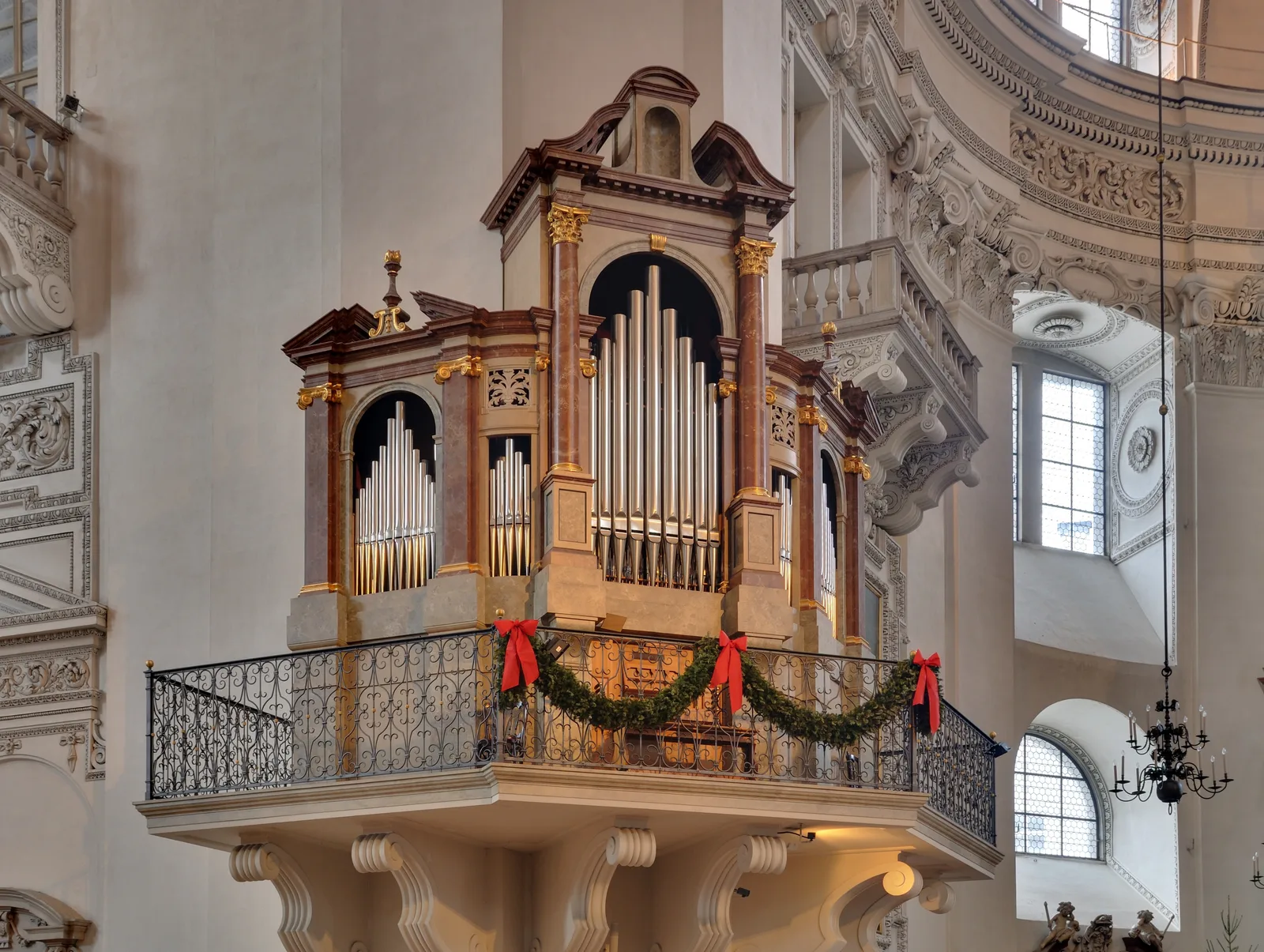
Photo: Taxiarchos228 / Wikimedia Commons · CC BY 3.0
- ✓Salzburg's musical wealth was built on salt — the prince-archbishops who ran the city for a thousand years bankrolled a grand court and cathedral music.
- ✓The early-Baroque cathedral, consecrated in 1628, was designed for spectacular sacred music, with multiple choir lofts and Italian-trained musicians.
- ✓Mozart was born here in 1756 and worked as court and cathedral organist before leaving for Vienna in 1781.
- ✓The Mozarteum, founded in the 19th century, is the institution that keeps the city's classical tradition alive today.
- ✓The Salzburg Festival, founded in 1920, turned the whole Old Town into a stage and made the city a world capital of summer music.
Why a small city sounds so large
Salzburg punches far above its weight in music, and the reason is older than Mozart. For a thousand years the city was an independent church-state ruled by prince-archbishops who grew enormously rich on the salt floated down the Salzach — the white gold that gave the river and the city their names. That wealth bought a princely court, an Italian-Baroque skyline and, crucially, the lavish musical establishment that any self-respecting European court maintained: composers, organists, choirboys, trumpeters and a cathedral built to fill with sound.
Understanding this is the key to enjoying Salzburg as a music city. The concerts you can hear today in the fortress, the Marble Hall and the great Festival halls are not a recent tourist invention bolted on to a pretty town. They are the living tail of a court tradition that stretches back to the Middle Ages, ran through Mozart, survived the loss of the archbishops' power, and was reinvented for the modern age by the founders of the Festival. This guide walks that history in plain language, so the city's music makes sense rather than just sounding nice.

The archbishops' court and cathedral music
Salzburg's musical golden age began long before its most famous son. The early-Baroque cathedral, consecrated in 1628 after fire destroyed its Romanesque predecessor, was conceived as a machine for sacred music — a vast Italianate church with several balconies and choir lofts arranged so that voices, brass and organ could answer one another across the nave in the spatial, polychoral style imported from Italy. On great feast days the building filled with antiphonal sound, the architectural embodiment of the archbishops' wealth and ambition.
To staff this, the court drew composers and players from across the German lands and Italy. Among the names that matter to historians is Heinrich Ignaz Franz Biber, the violinist-composer who served the Salzburg court in the later 1600s and is remembered for virtuoso violin writing and an enormous polychoral Mass long associated with the cathedral. By the time Leopold Mozart arrived to take a court post in the 1740s, Salzburg already had a deep, professional musical culture — the soil into which his prodigiously gifted son would be born.

At a glance: Salzburg's musical timeline
A rough map of the centuries, to place the sights you'll visit. Treat dates as historical context; confirm any current programmes and opening hours on official sites close to your trip.
- 1628: the Baroque cathedral is consecrated, designed for grand polychoral sacred music.
- Late 1600s: Heinrich Biber and others make the court a centre of virtuoso and church music.
- 1756: Wolfgang Amadeus Mozart is born at Getreidegasse 9.
- 1769–1781: Mozart serves the Salzburg court as organist and concertmaster before leaving for Vienna.
- 1783: Mozart's Mass in C minor is first heard at St Peter's Abbey.
- 19th century: the Mozarteum is founded to honour the composer and train musicians.
- 1920: the Salzburg Festival is founded; Jedermann is staged on Domplatz.
- Today: fortress, Mirabell, cathedral and dinner concerts run year-round, with Mozart Week in January.
Mozart: the city's defining figure
Wolfgang Amadeus Mozart was born in Salzburg on 27 January 1756 and lived here, on and off, for the first twenty-five years of his life — longer than he stayed anywhere else. He was baptised in the cathedral, grew up on Getreidegasse, and as a young man held a salaried post in the same archbishop's court his father served, working as organist and concertmaster and composing a great quantity of his early sacred and instrumental music for Salzburg's churches and palaces.
His relationship with the city was famously prickly. Mozart chafed under the archbishop Colloredo, found the provincial court stifling after the glamour of his European tours as a child prodigy, and finally broke with his employer in 1781 to seek his fortune in Vienna, where he spent his last decade. Salzburg, in other words, both formed him and lost him — a tension the city has spent two centuries turning into reverence. The two family houses, the cathedral font and St Peter's, where his unfinished C minor Mass was premiered in 1783, are the authentic anchors of that story.
Keeping the flame: the Mozarteum
After Mozart's death the city slowly transformed its difficult genius into its patron saint. The decisive institution was the Mozarteum, founded in the nineteenth century as a music society and conservatory dedicated to his memory and to the cultivation of music in Salzburg. Today its two faces — the Internationale Stiftung Mozarteum, which runs the Mozart museums and a renowned concert series, and the Mozarteum University, which trains musicians from around the world — keep the city's classical tradition genuinely alive rather than merely commemorated.
For visitors, the Mozarteum matters in two practical ways. Its concert hall is among the finest places in the city to hear serious chamber and orchestral music, and its annual Mozart Week (Mozartwoche) each January, built around the composer's birthday, brings world-class orchestras and soloists to Salzburg in a programme devoted largely to his music. It is the connoisseur's season — quieter, colder and less crowded than the summer Festival — and the clearest proof that Salzburg's relationship with Mozart is scholarly as well as commercial.
The Festival: a city becomes a stage
The single greatest event in Salzburg's modern musical history is the founding of the Salzburg Festival in 1920. Conceived in the aftermath of the First World War by a circle that included the director Max Reinhardt, the composer Richard Strauss and the writer Hugo von Hofmannsthal, the Festival set out to make Salzburg a place of cultural renewal — and, deliberately, to use the whole Baroque city as a theatre. Its signature opening image remains Hofmannsthal's morality play Jedermann, staged open-air on Domplatz in front of the cathedral, where the actors' cries echo off the church façade.
Across late July and August the Festival fills the Festspielhäuser carved into the Mönchsberg rock — among them the Großes Festspielhaus, the Haus für Mozart and the dramatic Felsenreitschule, the former riding school with its arcades cut into the cliff — with opera, drama and concerts at the highest international level. For a few weeks each summer Salzburg becomes one of the world's great music capitals, and hotel prices, restaurant tables and the whole rhythm of the city reorganise themselves around it. Whether or not you hold a ticket, the Festival is the reason the city still hears so much music.
Hearing the history today
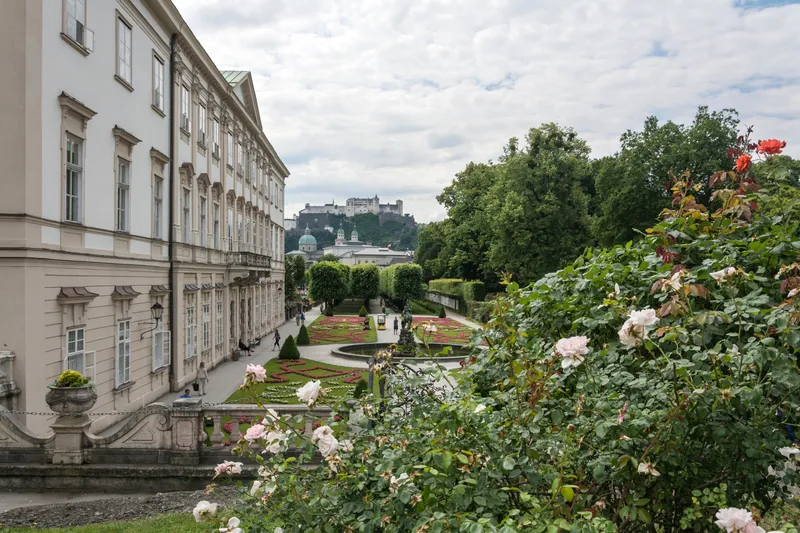
The pleasure of all this for a traveller is that the history is audible, not just visible. You can hear Mozart performed in the Marble Hall at Mirabell, where he himself is said to have played, or in the medieval rooms of Hohensalzburg with the basin spread out below; you can sit through a candlelit dinner concert against the abbey rock at St Peter's, or catch sacred music under the cathedral dome built four centuries ago to carry exactly that sound. None of it is a museum reconstruction — it is the same repertoire in the same rooms, still being played.
If you want to plan a music-led trip, two seasons stand out: Mozart Week in late January for the scholarly best, and the Festival in high summer for the marquee productions. Outside those peaks the standing concert circuit means you are never short of an evening of Mozart on any given night. Use the Mozart hub for the practical concert choices and the events calendar for current dates rather than relying on memory.
Related guides
Mozart in Salzburg
A practical guide to Mozart's Salzburg — the two family houses, the churches and squares, the concerts worth booking and the seasons that matter.
Read guide
Salzburg Festival Guide
The complete first-timer's guide to the Salzburg Festival — when it runs, the venues, how tickets work, what to wear, dinner timing, the free screens and a strategy for getting the most from a Festival trip.
Read guide
Mozart Week Salzburg guide
Plan Salzburg's winter Mozart festival — what Mozart Week (Mozartwoche) is, its January timing around the composer's birthday, the concerts and museums, and how to organise a cold-weather trip.
Read guideMore in Mozart & Music
6
Best Mozart Concerts in Salzburg
Compare fortress concerts, Mirabell concerts, dinner concerts, church music and Festival options to find the right Mozart evening.
Read guide
Mozart Dinner Concert Guide
Who should book a Mozart dinner concert in Salzburg, what to expect, dress, menu caveats and the alternatives worth weighing.
Read guide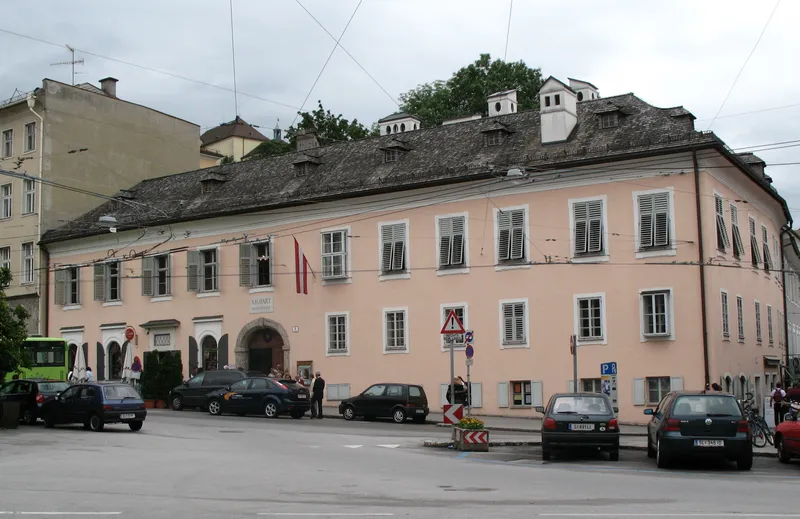
Mozart Residence Guide
Visit Mozart's later family home on Makartplatz — the rooms, exhibits, tickets, accessibility and how it compares with the Birthplace.
Read guide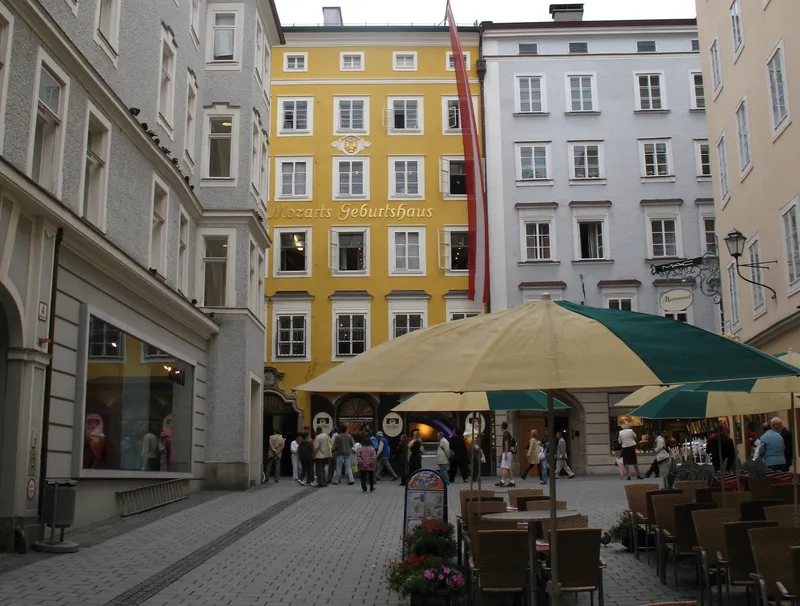
Mozart's Birthplace Guide
Tickets, rooms, exhibits, accessibility limits, Getreidegasse context and who should plan a visit to the house where Mozart was born.
Read guide
Salzburg Concerts Guide
Mozart dinners, fortress concerts, Mirabell concerts, cathedral music, Festival options and how to choose the right night for you.
Read guide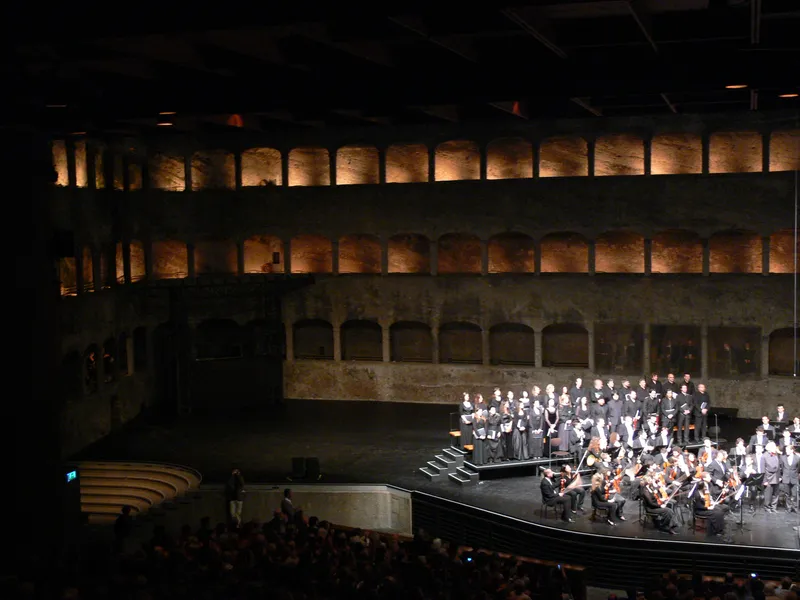
Salzburg Festival Venues Guide
Felsenreitschule, Großes Festspielhaus, Haus für Mozart, Domplatz and how venue location shapes your Festival night.
Read guide