Mozart Week Salzburg guide
Plan Salzburg's winter Mozart festival — what Mozart Week (Mozartwoche) is, its January timing around the composer's birthday, the concerts and museums, and how to organise a cold-weather trip.

Photo: Andreas Praefcke / Wikimedia Commons · CC BY 3.0
- ✓Mozart Week (Mozartwoche) is Salzburg's winter festival dedicated entirely to Mozart, held each January around the date of his birth.
- ✓Mozart was born in Salzburg on 27 January 1756, and the festival is built around that birthday anniversary.
- ✓It is organised by the Stiftung Mozarteum Salzburg, the foundation that also runs the Mozart museums and concert halls.
- ✓The programme draws leading international orchestras, conductors, soloists and ensembles for a concentrated week-plus of Mozart-focused concerts.
- ✓January is Salzburg's quiet, cold, low-cost season — a connoisseur's window for serious music without the summer crowds or prices.
Mozart's birthday, turned into a festival
Mozart Week is the purest expression of Salzburg's identity as Mozart's city. Held every January around the anniversary of his birth on 27 January 1756, the Mozartwoche gathers some of the finest musicians in the world for a concentrated programme devoted to Mozart and his world — symphonies, concertos, chamber music, opera in concert and recitals, often set in dialogue with the composers around him. It is run by the Stiftung Mozarteum Salzburg, the foundation that safeguards Mozart's legacy in the city and operates both his birthplace and family residence as museums. This is, in other words, the festival the city's own Mozart institution mounts in his honour.
For a music-loving traveller, Mozart Week is the quiet connoisseur's season — the antithesis of high summer. Salzburg in late January is cold, often snowy and beautifully calm: the squares are uncrowded, hotel rates are at their lowest, and the city belongs to residents and the festival audience. You come for the music, you wrap it in a cold-weather city break of coffeehouses, museums and the fortress under snow, and you pay a fraction of the summer cost for hotels and tables. This guide explains what Mozart Week is, where it plays, how it connects to the Mozart museums, and how to plan a January trip around it.

At a glance: Mozart Week
A quick orientation. The dates centre on Mozart's 27 January birthday but the exact span and programme change each year, so treat specifics as evergreen and verify the current edition with the Stiftung Mozarteum before booking.
- What: the Mozartwoche (Mozart Week), Salzburg's winter festival devoted to Mozart's music.
- When: late January, around the 27 January anniversary of Mozart's birth — verify the exact dates each year.
- Born: Mozart was born at No. 9 Getreidegasse, Salzburg, on 27 January 1756.
- Organiser: the Stiftung Mozarteum Salzburg, which also runs Mozart's Birthplace and the Mozart Residence.
- Where: principally the Mozarteum's concert halls (the Großer Saal and Wiener Saal) and the Festspielhäuser on Hofstallgasse.
- Who plays: leading international orchestras, conductors, soloists and chamber ensembles.
- Season: cold, quiet, low-cost Salzburg — a strong-value culture window away from the crowds.
- Tickets: released in advance through the Mozarteum — verify prices and on-sale dates.
What it is, and the Mozarteum behind it
Mozart Week is more than a string of concerts; it is the flagship event of the Stiftung Mozarteum Salzburg, the foundation that has cared for Mozart's memory in the city for well over a century. The Mozarteum holds his manuscripts and instruments, runs the two Mozart house-museums, and operates fine concert halls of its own — the Großer Saal and the intimate Wiener Saal. Each January it pours its resources into a single intense week, inviting orchestras and artists of the highest rank to perform Mozart, often alongside the music that shaped him and that he shaped in turn. The programming has real depth: this is a festival for people who want to hear Mozart taken seriously, not as a tourist soundtrack.
Because the festival is curated by the institution that knows Mozart best, its programmes are thoughtfully built — pairing famous works with rarities, mixing symphonic and chamber scales, and sometimes including staged or semi-staged opera. The artistic direction and exact line-up change from year to year, so the way to plan is to read the announced programme and choose the concerts that speak to you. If a particular orchestra, conductor or work is your draw, watch for the on-sale date and book early; the best concerts in the best halls do sell out despite the quiet season.
Where it plays, and pairing it with the Mozart museums
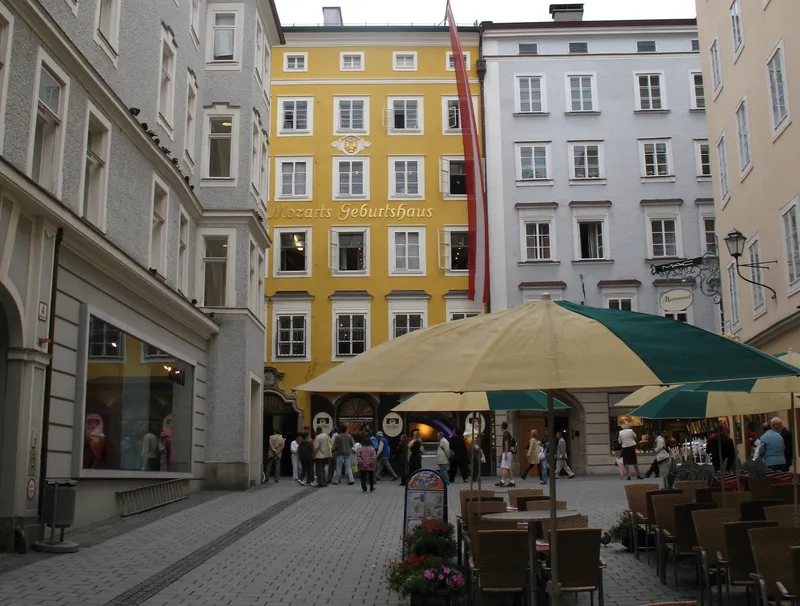
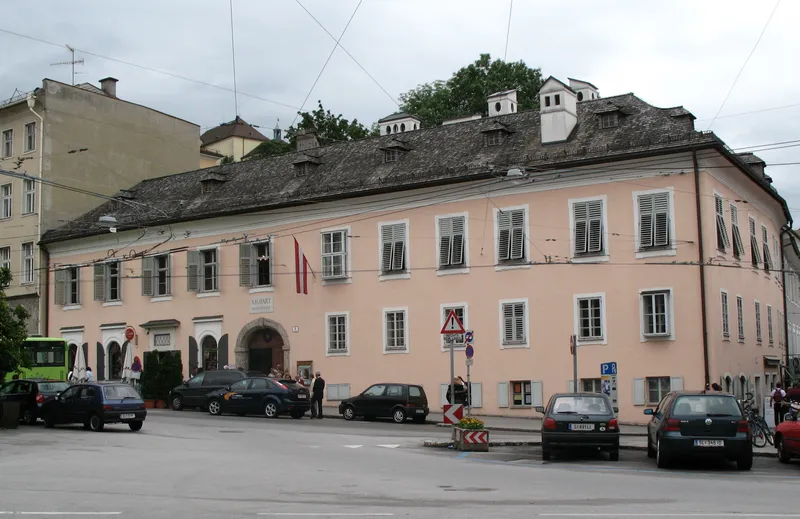
Mozart Week's home base is the Mozarteum's own halls just off Schwarzstraße on the right bank — the grand Großer Saal and the smaller Wiener Saal — and it also uses the Festspielhäuser on Hofstallgasse in the Old Town for larger orchestral programmes. All of these are central and walkable, which makes a festival evening easy to combine with a day of Mozart sightseeing. And no January trip for the festival is complete without the two house-museums the same foundation runs: Mozart's Birthplace at No. 9 Getreidegasse, where he was born in 1756, and the later Mozart Residence on Makartplatz, where the family lived afterwards. Together they tell two halves of one story, and they are at their quietest in winter.
A natural rhythm for the trip is museums and squares by day, concerts by night: the Birthplace and Residence, a coffeehouse to thaw out, the fortress under snow if the weather is dramatic, then a Mozart Week concert in the evening. Because the museums and many concerts share the Mozarteum's stewardship, the whole experience hangs together — you are seeing where Mozart lived and hearing his music performed at the highest level, in the city that made him, on the week of his birthday. Verify museum opening hours for the season, as winter timetables can differ.

January in Salzburg: the cold-weather break
Mozart Week is inseparable from its season, and January in Salzburg is a particular pleasure if you embrace the cold. This is deep winter: short days, frequent snow, temperatures often around or below freezing, and a city that has shaken off both the Christmas-market crowds (the markets close after the festive season) and the summer throng. The upside is real value — hotel rates are at their annual low, restaurant tables are easy, and the Old Town is calm and atmospheric under snow. Pack properly for it: a warm coat, hat, gloves and good footwear for icy cobbles, and plan indoor anchors like the museums and coffeehouses between concerts.
Framed that way, Mozart Week is one of the best-value cultural trips Salzburg offers. The tickets are the splurge; everything around them is cheaper and quieter than at any other notable time of year. It suits travellers who genuinely want to hear Mozart, who don't mind the cold, and who like the idea of a Baroque city in winter with the squares to themselves. For the full picture of the season — weather, what's open, what to pack — see the January and by-month guides, and verify the festival's exact dates and prices with the Mozarteum before you book.

Tickets and booking the trip
Mozart Week tickets are released in advance through the Stiftung Mozarteum's box office, and while January is otherwise the quiet season, the festival concentrates a devoted, international audience into a single week, so the headline concerts — the big orchestras in the Großes Festspielhaus, the most celebrated soloists in the Großer Saal — do sell out. The approach is the familiar one: read the announced programme when it appears, choose the concerts that matter to you, and book promptly once seats are on sale rather than leaving it to chance. We don't quote prices, because they vary by year, programme and seat category; verify the current tariff and any package or museum-combination options directly with the Mozarteum.
Around the tickets, the logistics are pleasingly easy in low season. Hotels are at their cheapest and most available, so you have room to choose a central base near the Mozarteum or in the Old Town without the summer scramble. Restaurant tables are simple to secure, even for a special pre-concert dinner. The one real constraint is the cold and the short days, which argues for clustering indoor anchors — the two Mozart house-museums, the coffeehouses, the concerts — and treating any outdoor sightseeing as a bonus when the weather is kind. Build the trip around your chosen concerts first, then fill the daylight hours with Mozart's Salzburg.


Related guides

Salzburg in January
January in Salzburg — deep-winter quiet, Mozart Week, snow on the fortress, cosy coffeehouses, the year's best hotel value and what to plan around the cold and short days.
Read guide
Mozart in Salzburg
A practical guide to Mozart's Salzburg — the two family houses, the churches and squares, the concerts worth booking and the seasons that matter.
Read guide
Best Mozart Concerts in Salzburg
Compare fortress concerts, Mirabell concerts, dinner concerts, church music and Festival options to find the right Mozart evening.
Read guideMore in Events
6
Hellbrunn Advent Market guide
A guide to the Hellbrunn Advent Market at Schloss Hellbrunn — its fairy-tale palace setting, family features, how to get there on bus 25, and how to pair it with the city Christmas markets.
Read guide
Jazz & The City Salzburg
How to plan a trip around Jazz & The City — Salzburg's free autumn jazz festival that turns the whole Old Town into a stage for several October days, with the venues, timing, hotel and nightlife strategy to make the most of it.
Read guide
New Year in Salzburg
How to spend New Year's Eve and New Year's Day in Salzburg — where to stay, where to dine, where to gather for the turn of the year, how to move around, and what's open and closed over the festive turn, with a romantic and practical plan for the trip.
Read guide
Rupertikirtag Salzburg
How to visit the Rupertikirtag — Salzburg's traditional autumn fair around the cathedral squares, held for the feast of the city's patron saint — with what to expect from the rides, food, beer and crowds, and how to time it.
Read guide
Salzburg Advent Singing
How to plan a visit to the Salzburger Adventsingen — the city's landmark Advent Singing — with what the event is, where it's staged, how it fits the Christmas markets and where to stay in December.
Read guide
Salzburg Christmas markets
A guide to Salzburg's Advent markets — the historic Christkindlmarkt on Domplatz and Residenzplatz, Hellbrunn, Mirabellplatz, the Sternadvent and more, with timing, food, crowds and hotel advice.
Read guide