What to Eat in Salzburg
The dishes that define a meal in Salzburg — schnitzel, dumplings, goulash, river trout, strudel, beer-hall classics and the soufflé that mimics the mountains.

Photo: Mark König / Unsplash
- ✓Austrian cooking in Salzburg is hearty, Alpine and Bavarian-leaning: schnitzel, roast pork, dumplings, sweet mains and a serious cake habit.
- ✓Wiener Schnitzel is veal, pounded thin and fried to a crisp gold; the cheaper pork version is honestly labelled 'Schnitzel vom Schwein'.
- ✓Salzburger Nockerl — three soft peaks of soufflé meant to echo the city's hills — is the local sweet to share once.
- ✓Beer-hall and Stüberl staples (Bierfleisch, Kasnocken, Bratwürstel, Brettljause) are the real everyday Salzburg table.
- ✓Tafelspitz, Tiroler Gröstl, Knödel and Apfelstrudel round out a menu you'll see again and again across the Old Town.
An Alpine table with a sweet tooth
Salzburg sits where Austria leans hard into the Alps and brushes up against Bavaria, and its food tells you exactly that. This is warming, mountain-and-meadow cooking built for cold valleys and long winters: breaded and fried things, slow-braised meats, dumplings in every register, river fish from the lakes nearby, and a dessert culture so developed that sweet dishes here are sometimes a main course rather than an afterthought. It is comfort food with a Habsburg pedigree — generous, golden and almost never delicate.
If you only know one Austrian dish it is probably the schnitzel, but a proper Salzburg menu runs much wider. You'll meet boiled beef eaten by emperors, smoked pork with sauerkraut, cheese-laced dumplings from the high pastures, and a soufflé shaped like the surrounding mountains. This guide walks you through what to order, how the dishes differ, and where each one fits across a day of eating — from a beer-hall lunch to a special dinner and a coffeehouse cake stop. Use it alongside the food-and-drink hub for the wider lay of the land.
At a glance
A quick map of the Salzburg table. The notes below are evergreen — menus, spellings and what's in season vary by kitchen, so treat these as a guide rather than a fixed list.
- The savoury icon: Wiener Schnitzel — veal escalope, breaded and fried golden; pork versions are cheaper and clearly labelled.
- The everyday plates: Schweinsbraten (roast pork) with dumplings, Bratwürstel, Bierfleisch, Tiroler Gröstl, Brettljause (a cold board of cured meats and spreads).
- From the mountains: Kasnocken (cheesy spätzle-style dumplings) and Kaspressknödel (fried cheese-dumpling) floated in clear broth.
- From the water: trout and char (Forelle, Saibling) from the nearby Salzkammergut lakes, often pan-fried 'Müllerin' style.
- The imperial classic: Tafelspitz — boiled beef with apple-horseradish and chive sauce, Emperor Franz Joseph's favourite.
- Sweet mains: Kaiserschmarrn (shredded, caramelised pancake) and Topfenknödel (quark dumplings) blur the line between dinner and dessert.
- The local sweet: Salzburger Nockerl — a three-peaked soufflé you should share, and order early in the meal as it's baked to order.
- To drink: Austrian beer (Stiegl is the Salzburg brewery), Grüner Veltliner wine, and Almdudler, the herbal soda.
Schnitzel, and how to order it right
Start with the schnitzel, because almost everyone does — and because there's a small honesty test built into the menu. A true Wiener Schnitzel is made from veal: a thin escalope pounded out, dredged in flour, egg and breadcrumbs, and fried in plenty of fat until the coating puffs slightly away from the meat and turns a deep, even gold. It arrives with a lemon wedge and, classically, a potato or cucumber salad or parsleyed potatoes. The breadcrumb crust should be light and shatteringly crisp, never greasy.
Veal is expensive, so most places also offer a pork version. By Austrian convention that cheaper schnitzel cannot be called 'Wiener Schnitzel' on its own; it must be flagged as 'Schnitzel vom Schwein' or 'Wiener Art' (Viennese style). Neither is wrong — pork schnitzel is a beloved everyday plate — but knowing the difference saves you from paying veal prices for pork, or feeling short-changed. Order the veal when you want the classic and the pork when you want the value; both are excellent done well.
Roast pork, dumplings and the beer-hall plate
The true everyday food of Salzburg lives in the beer halls and the Stüberl (the cosy wood-panelled inn rooms), and it revolves around pork and dumplings. Schweinsbraten — slow-roasted pork with crackling, a dark caraway-scented gravy and sauerkraut — is the Sunday-lunch backbone of the region, almost always served with a Semmelknödel (bread dumpling) or two to soak up the sauce. You'll also meet Bratwürstel (grilled sausages with kraut and mustard), Bierfleisch (beef braised in beer), and the cold platter known as a Brettljause: cured meats, lardo, spreads, pickles and dark bread served on a wooden board, perfect with a beer under the chestnut trees.
Dumplings deserve their own paragraph because Austrians take them seriously. Beyond the bread Knödel there are Speckknödel (studded with smoked bacon), Kaspressknödel (a flattened, pan-fried cheese dumpling that's often served floating in a clear beef broth), and the sweet ones that arrive at dessert. Up in the Alpine pastures around Salzburg the signature is Kasnocken — small soft dumplings tossed with melted mountain cheese and topped with fried onions, hearty enough to be a meal on their own. This is the food to seek out at the Augustiner beer hall or any honest Gasthaus.
Goulash, Tafelspitz and the Habsburg classics
Salzburg's menus carry the wider inheritance of the old empire, and two dishes especially. Goulash (Gulasch) — paprika-rich beef stew, a legacy of Hungary's place in the Habsburg lands — turns up everywhere, from a hearty bowl with a dumpling to the Viennese Saftgulasch eaten with a fresh Semmel. It is reliable cold-weather fuel and a good test of a kitchen: the sauce should be deep and glossy, never thin.
The grander imperial dish is Tafelspitz: a prime cut of beef gently boiled in broth with root vegetables and served in its own consommé, traditionally with crisp rösti-style potatoes, creamed spinach, apple-horseradish and a chive sauce. It was famously the favourite of Emperor Franz Joseph, and a good version is a quiet luxury — clean, savoury and deeply Austrian. It's a dish to order at a proper restaurant rather than a quick lunch stop, and a fine choice for a special evening table.
Fish from the lakes, and lighter plates
If the meat-and-dumpling theme feels heavy, Salzburg has a lighter card thanks to the Salzkammergut lakes on its doorstep. Freshwater trout (Forelle) and char (Saibling, prized for its delicate flesh) come from waters like the Wolfgangsee and Fuschlsee and appear on menus pan-fried 'Müllerin' in browned butter, or simply grilled with potatoes and salad. It is some of the best eating in the region and a welcome change of register from the fried-and-roasted mainstays.
Lighter still are the warm-weather options: a Brettljause makes a fine sharing lunch; Tiroler Gröstl (a pan of fried potatoes, onions and beef or pork topped with a fried egg) is satisfying without being elaborate; and seasonal asparagus in spring or chanterelles (Eierschwammerl) in late summer show up across the city. Salads here tend to come dressed Austrian-style with pumpkin-seed oil — the dark green, nutty oil from neighbouring Styria that's worth seeking out.
Sweet things, from Schmarrn to Nockerl
Austria's genius is dessert, and in Salzburg sweetness sometimes claims the whole plate. Kaiserschmarrn — a fluffy pancake torn into pieces, caramelised in butter, dusted with icing sugar and served with stewed plums or apple sauce — is so substantial it's eaten as a main, especially after a day in the mountains. Topfenknödel (soft quark dumplings rolled in buttery crumbs) and the ubiquitous Apfelstrudel, with its paper-thin pastry, raisins and cinnamon apples, are the everyday sweets you'll see on almost every menu.
And then there is the city's own: Salzburger Nockerl, three or four billowing peaks of vanilla soufflé dusted with sugar, designed to mimic the snow-capped hills around the city. It is enormous, it is theatrical, and it must be baked to order and shared — order it when you order your mains, not at the end. It has its own full guide. For the lighter, buy-and-walk sweets — the Mozartkugel and the coffeehouse cakes — see the pastry-and-desserts page.
How to eat across a Salzburg day
Pace yourself, because the portions are generous and the temptations constant. A good rhythm is a hearty late lunch (schnitzel, roast pork or trout) at a Gasthaus or beer hall, an afternoon coffee-and-cake break at a classic coffeehouse, and a lighter or more special dinner — Tafelspitz, lake fish, or a shared Nockerl as the centrepiece. Many kitchens keep traditional hours, so don't leave a hot lunch too late; afternoons can fall into a 'kitchen closed' gap between lunch and dinner service.
A few practical notes: tipping is modest, usually rounding up or roughly five to ten percent handed directly to the server rather than left on the table; tap water isn't always free, so a 'Leitungswasser' request may still draw a small charge; and 'a beer' by default means a half-litre Krügerl unless you ask for a smaller Seidl. Bring an appetite and a willingness to share — Salzburg's table is built for it. To turn this into a route, pair it with the food-and-drink hub and the dessert guide.

Related guides

Salzburger Nockerl: The Mountain Soufflé
Salzburg's famous soufflé dessert — what it is, why it's shaped like the hills, where to try it, and how to order and share it without disappointment.
Read guide
Salzburg Pastry and Desserts
The Mozartkugel, Sachertorte, strudel, the coffeehouse cake counter, Christmas treats and the Salzburger Nockerl — Salzburg's sweet repertoire and where it fits your day.
Read guide
The Best Cafés in Salzburg
Salzburg's classic coffeehouses, cake stops, modern coffee bars and rainy-day refuges — plus how to order coffee the Austrian way and when to go.
Read guideMore in Food & Drink
6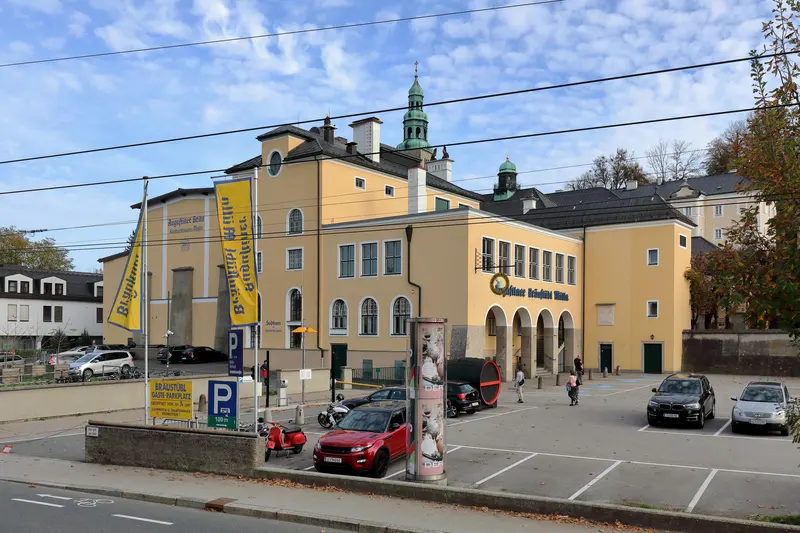
Augustiner Bräu Mülln guide
A full guide to Salzburg's great monastery beer hall — the barrel-poured beer, the stone mug ritual, the food stalls, the chestnut garden, timing and how to do it right.
Read guide
Best Bars in Salzburg
Where to drink in Salzburg after dark — cocktail bars, wine bars, hotel lounges, beer halls, student nightlife and quiet candlelit corners for a low-key evening.
Read guide
Best beer halls in Salzburg
A guide to Salzburg's beer halls and gardens — from the monastery barrels of the Augustiner to the Stiegl world, the city taverns and the etiquette that ties them together.
Read guide
Best Restaurants in Salzburg
A traveller-ready way to choose where to eat in Salzburg — sorted by area, mood and budget, with honest notes on Festival-season demand and when you genuinely need to reserve.
Read guide
Breakfast and brunch in Salzburg
How to start the day in Salzburg — grand coffeehouse breakfasts, hotel buffets, bakery mornings, market stalls and quick meals before an early train or day trip.
Read guide
Budget Eats in Salzburg
Bakeries, market stalls, sausage stands, picnic ideas, casual Austrian lunches and station food — how to eat well in Salzburg without spending much.
Read guide