The Best Cafés in Salzburg
Salzburg's classic coffeehouses, cake stops, modern coffee bars and rainy-day refuges — plus how to order coffee the Austrian way and when to go.

Photo: Arash Hatami / Unsplash
- ✓Salzburg's coffeehouse tradition is part of Austria's UNESCO-listed Viennese coffee-house culture — a place to linger, not grab and go.
- ✓Café Tomaselli on Alter Markt is the grand old name, run by the same family for generations and frequented by the Mozarts.
- ✓Café Bazar on the right bank, Café Fürst (home of the original Mozartkugel) and the Café Sacher are the other heritage stops.
- ✓A coffee buys you the table for as long as you like — and it comes with a small glass of water.
- ✓Order by name: a Melange, a Großer/Kleiner Brauner, a Verlängerter or an Einspänner, not just 'a coffee'.
The art of sitting still
A Salzburg café is not a place to do business in fifteen minutes; it's a place to do nothing well for an hour. The city shares in Austria's coffeehouse culture — the unhurried ritual of a coffee served on a little silver tray with a glass of water, a marble table you can occupy for as long as you like, newspapers on wooden frames, and a glass case of cakes you'll eventually give in to. It's so distinctive that Viennese coffee-house culture is recognised by UNESCO as intangible cultural heritage, and Salzburg's grand old cafés keep the same spirit beneath chandeliers and stucco.
This guide sorts the city's cafés by what you're actually after: the heritage coffeehouses for atmosphere and cake, the modern specialty roasters for a proper flat white, the cosy refuges for a rainy afternoon, and the views worth a detour. Whichever you choose, the cardinal rule is the same — slow down. You came to Salzburg partly to be charmed, and a good coffeehouse hour is one of the cheapest, surest ways to be.
At a glance
How the coffeehouse works, and the classic names to know. Details are evergreen — opening days and prices change, so confirm hours close to your visit.
- The grand classics: Café Tomaselli (Alter Markt), Café Bazar (right bank, riverside), Café Fürst (original Mozartkugel), Café Sacher (in the Hotel Sacher).
- What 'a coffee' costs you: the table for as long as you want, plus a small glass of water served alongside.
- How to order: Melange (espresso with frothed milk), Brauner (with a little milk, kleiner/großer for one/two shots), Verlängerter (lengthened, Americano-style), Einspänner (black with whipped cream in a glass).
- The cakes: Sachertorte, Apfelstrudel, Esterházy, Cremeschnitte and seasonal specials from the glass vitrine.
- Rainy-day refuge: coffeehouses are the city's natural shelter when the Alpine weather turns.
- Pay at the table: flag the waiter; tipping is rounding up or roughly 5–10% handed over directly.
- Best time: mid-morning or mid-afternoon; the grand cafés get busy and queue at peak sightseeing hours.
The grand coffeehouses
Start with the heritage names, because they're the reason people talk about Salzburg's café culture at all. Café Tomaselli, on the Alter Markt square, is the headline act: run by the same family for generations, all marble, wood and waiters with trays, and a place the Mozart family actually frequented. It has its own full guide here, and it's the one to visit if you want the complete old-world ritual — and to brave a queue for it in season.
Across the river, Café Bazar is the elegant, slightly literary alternative, a riverside institution with a terrace facing the Old Town and a long history of artists and Festival names passing through. Café Fürst, also family-run, is where the original handmade Mozartkugel was invented in 1890 and is still made the old way — come for the chocolate and stay for the coffee. The Café Sacher inside the Hotel Sacher serves the famous chocolate-and-apricot Sachertorte in plush surroundings. Between these four you have the full spread of Salzburg's grand coffeehouse tradition.
Modern coffee and specialty roasters
If your idea of a good coffee is a carefully pulled flat white from a single-origin roast rather than a Melange under a chandelier, Salzburg has caught up. A small but growing wave of specialty cafés — independent roasters and third-wave coffee bars, mostly tucked into the Old Town's side lanes and the Andräviertel and Mülln districts on the right bank — does the modern thing properly: espresso machines dialled in, oat-milk options, brunch plates and laptop-friendly corners.
These places trade the silver-tray ceremony for lighter rooms, good beans and a more contemporary crowd, and they're the better bet if you want a strong coffee to take away (which the grand cafés don't really do) or a flat white that tastes like one. They also tend to do the best breakfast and brunch in town. Ask a local barista for a current favourite — the specialty scene shifts faster than the heritage one, so the freshest tip beats any fixed list.
Cake, and how to order coffee like an Austrian
The cake is half the reason to sit down. The glass vitrine in a Salzburg coffeehouse is a small museum of Austrian patisserie: dark, glossy Sachertorte with its apricot seam; flaky Apfelstrudel still faintly warm; layered Esterházy and Cremeschnitte; and a rotating cast of seasonal specials. Order at the counter or from the waiter, and don't be shy about asking what's freshest. A slice of cake and a coffee is the classic Salzburg afternoon, and it's surprisingly good value for the time you get to sit.
On the coffee, ditch the English word 'coffee' and order by name. A Melange is the friendly default — espresso topped with steamed and frothed milk, close to a cappuccino. A Brauner is espresso with a little milk (kleiner for one shot, großer for two); a Verlängerter is 'lengthened' with hot water, the local Americano; an Einspänner is a black coffee crowned with whipped cream and served in a glass. Whatever you choose arrives with a glass of water, and the table is yours. That's the deal, and it's a good one.
Rainy days and the best views
Salzburg sits in the Alps, which means rain — sometimes for days. The coffeehouse is the city's built-in answer: nowhere is it more acceptable to claim a warm corner, order one drink and read, write or simply watch the weather for two hours. When a downpour scuppers your sightseeing, treat it as permission to do the most Austrian thing possible and settle into a café until it passes. The grand rooms are especially atmospheric under grey skies.
For views, the calculus is different. The riverside terraces — Café Bazar on the right bank chief among them — give you the Old Town and fortress across the Salzach when the sun's out. Up on the Mönchsberg, the M32 café at the Museum der Moderne pairs coffee with one of the finest panoramas in the city. And the Steinterrasse, Hotel Stein's rooftop terrace near the river, offers an elevated spot for a drink with a skyline. Pick atmosphere on wet days, a terrace on bright ones.


When to go, and how to fit it in
The heritage cafés are busiest at the obvious sightseeing hours — late morning and through the afternoon — and the famous ones can queue in high season and during the Festival. If you want a window seat and a calm table, aim for opening time or the lull around mid-afternoon, and avoid arriving with a tour group's timing. The modern coffee bars are liveliest at breakfast and brunch.
A coffeehouse stop slots naturally between sights: a Melange and a slice of strudel after the cathedral squares, or a riverside coffee on the way between the Old Town and Mirabell. Don't try to rush it — the whole point of a Salzburg café is that you're allowed to linger. Pair this guide with the dedicated Tomaselli page for the grand experience, and the desserts guide for what to order off the cake cart.
Related guides
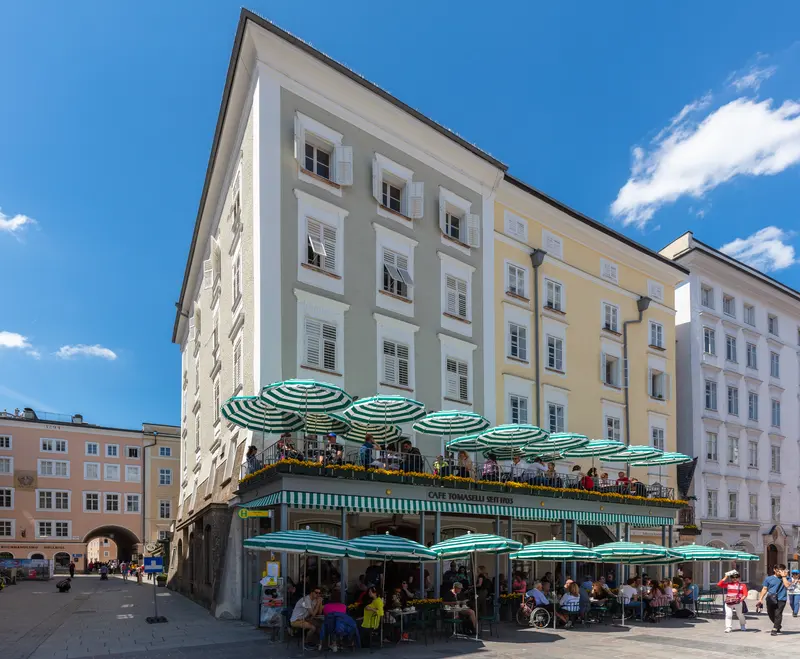
Café Tomaselli: Salzburg's Oldest Coffeehouse
How to visit one of Austria's oldest coffeehouses on the Alter Markt — its history, what to order, the cake tray, the terrace and how to avoid the queues.
Read guide
Salzburg Pastry and Desserts
The Mozartkugel, Sachertorte, strudel, the coffeehouse cake counter, Christmas treats and the Salzburger Nockerl — Salzburg's sweet repertoire and where it fits your day.
Read guide
What to Eat in Salzburg
The dishes that define a meal in Salzburg — schnitzel, dumplings, goulash, river trout, strudel, beer-hall classics and the soufflé that mimics the mountains.
Read guideMore in Food & Drink
6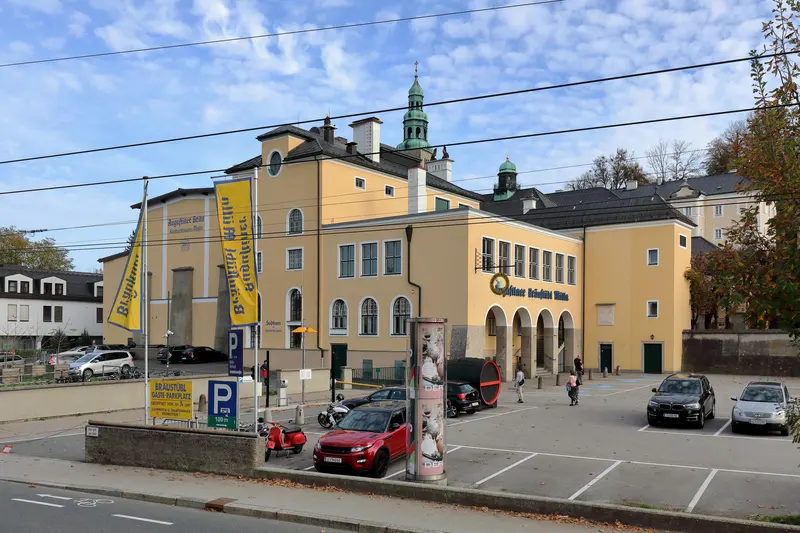
Augustiner Bräu Mülln guide
A full guide to Salzburg's great monastery beer hall — the barrel-poured beer, the stone mug ritual, the food stalls, the chestnut garden, timing and how to do it right.
Read guide
Best Bars in Salzburg
Where to drink in Salzburg after dark — cocktail bars, wine bars, hotel lounges, beer halls, student nightlife and quiet candlelit corners for a low-key evening.
Read guide
Best beer halls in Salzburg
A guide to Salzburg's beer halls and gardens — from the monastery barrels of the Augustiner to the Stiegl world, the city taverns and the etiquette that ties them together.
Read guide
Best Restaurants in Salzburg
A traveller-ready way to choose where to eat in Salzburg — sorted by area, mood and budget, with honest notes on Festival-season demand and when you genuinely need to reserve.
Read guide
Breakfast and brunch in Salzburg
How to start the day in Salzburg — grand coffeehouse breakfasts, hotel buffets, bakery mornings, market stalls and quick meals before an early train or day trip.
Read guide
Budget Eats in Salzburg
Bakeries, market stalls, sausage stands, picnic ideas, casual Austrian lunches and station food — how to eat well in Salzburg without spending much.
Read guide