Best Things to Do in Salzburg
A ranked first-trip shortlist of the best things to do in Salzburg — what to book, what is free, and how to group the city so you never backtrack.

Photo: Nikolai Kolosov / Unsplash
- ✓If you do one thing, make it Hohensalzburg Fortress — for the castle itself and for the panorama over the whole basin.
- ✓Mirabell Gardens at opening time is the best free half-hour in the city, fortress framed and tour groups not yet arrived.
- ✓Mozart's Birthplace on Getreidegasse is the most atmospheric of the two Mozart museums.
- ✓Most of this list is walkable in a tight loop; only the lakes and salt mines need transport or a tour.
- ✓Book the fortress concert and any Festival tickets ahead; the squares, the river walk and the churches are free.
How we ranked this — and how to use it
Salzburg is small, dense and unusually generous: you can see the headline sights of a great European city in a focused day or two without ever feeling rushed. This is the shortlist we'd hand a first-timer, ordered roughly by how essential each stop is and by how much it defines the city — not by ticket price or marketing budget. Near the top are the unmissables that you'd regret skipping; lower down are the rewarding extras that turn a good trip into a memorable one.
Use it as a menu, not a march. Almost everything here sits inside or just beside the Old Town, so the smart move is to group by area rather than by rank: do the left-bank cluster (fortress, cathedral, squares, St. Peter's) in one block, the right-bank cluster (Mirabell, the Mozart Residence) in another, and save the lakes and mountains for a separate day. The full hub maps how it all joins up; the itineraries pages turn it into a timed plan.

1. Climb Hohensalzburg Fortress
If you do only one thing, do this. Begun in 1077 and enlarged by the prince-archbishops over centuries, Hohensalzburg is one of the largest fully preserved castles in Central Europe, and it was never taken by siege — which is exactly why the city below it stayed intact. Inside are the gilded late-Gothic state rooms, the fortress museums and the Reckturm watchtower, where the panorama over the domes, the river and the Untersberg is the photo you came for.
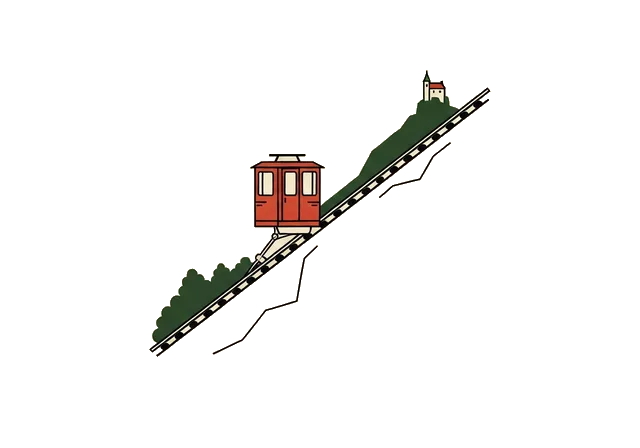
Ride the Festungsbahn funicular up from Festungsgasse for the easy, all-weather option, or walk the steep cobbled path for free. Check whether your Salzburg Card already covers the funicular and admission before buying separately, and go early or late to dodge the mid-morning tour crush.
2. Wander the UNESCO Old Town squares
The left-bank Altstadt is a UNESCO World Heritage Site for its preserved Baroque townscape, and its ceremonial heart is a chain of three linked squares you can stroll in minutes: Domplatz under the cathedral dome, the grander Residenzplatz with its huge Baroque fountain and Glockenspiel carillon, and Mozartplatz with the composer's statue. This is the open-air stage where the Festival's Jedermann is performed each summer.
There is no ticket and no rush — the squares are simply there to be walked through, ideally more than once, in different light. Early morning before the crowds and the blue hour after the cafés light up are the two best windows.

3. Walk Getreidegasse and see Mozart's Birthplace
Getreidegasse is the medieval shopping canyon of Salzburg, a narrow lane roofed by a forest of ornate wrought-iron guild signs — even the modern chains hang their own. At No. 9, the bright yellow house, Mozart was born in 1756 and the family lived for years; the Birthplace museum has welcomed visitors since 1880 and is the more atmospheric of the city's two Mozart houses, with original instruments and family portraits in the rooms where he grew up.
Don't just walk the street — slip through the Durchhäuser, the pass-through houses that link Getreidegasse to the river, because the hidden courtyards behind the shopfronts are some of the loveliest corners in the Old Town.
4. Mirabell Palace and Gardens (and go early)
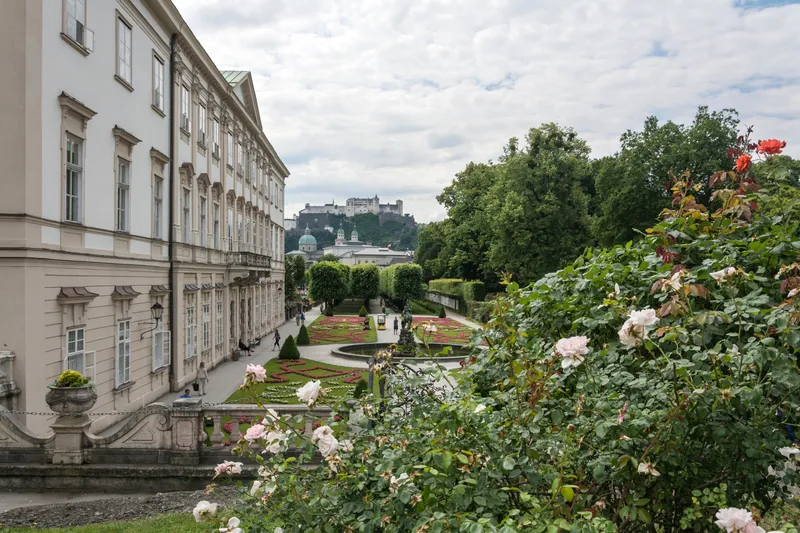
Mirabell is the right bank's set piece and the best free experience in Salzburg: a formal Baroque garden whose central axis is aligned to point straight across the river at the fortress, giving the city's most photographed view. The Pegasus Fountain and the terraced steps are the Sound of Music's 'Do-Re-Mi' locations, beloved and busy.
The trick is timing. Arrive right at opening and you can have the parterre almost to yourself, the light soft and the tour groups still on their coaches. Inside the palace, the Marble Hall — once a prince-archbishop's ballroom — is one of Europe's most beautiful small concert rooms and hosts intimate evening Mirabell concerts.
5. Salzburg Cathedral and St. Peter's
Salzburg Cathedral (the Dom) is the early-Baroque centrepiece of the left bank, an Italian-influenced church of pale marble beneath a vast dome, where Mozart was baptised and later played the organ. Entry to the nave is generally free; the dome, crypt and DomQuartier museum route round out a deeper visit.
A few steps away, St. Peter's Abbey is older and quieter, with a Romanesque core dressed in Rococo, a famous churchyard of wrought-iron grave markers, and catacombs cut into the cliff face of the Mönchsberg above. Together the two churches show Salzburg's two moods — grand ceremony and ancient hush — within a two-minute walk.

6. Hear a concert — fortress, Mirabell or St. Peter's
In the city that thinks in music, an evening concert is an easy, elegant way to spend a night. The three classic formats differ mostly by setting. A fortress concert pairs Mozart and Haydn with the candlelit Golden Hall and a funicular ride up after dark. A Mirabell concert uses the jewel-box Marble Hall for chamber music in a former ballroom. A St. Peter's dinner concert weaves a meal through the programme in the historic abbey restaurant.
These run year-round and are bookable ahead, which is worth doing in summer. If your trip lands in late July or August, the Salzburg Festival itself — opera, drama and orchestral concerts across the Festspielhäuser — is the headline event, and tickets go fast.

7. Follow the Sound of Music trail
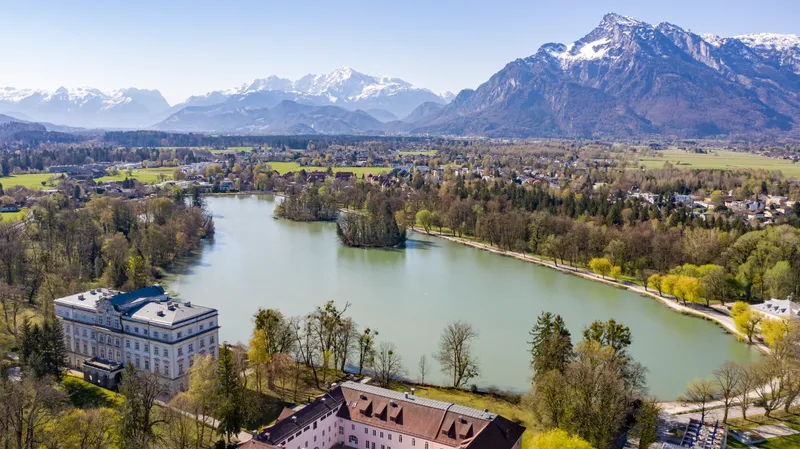
Whether you arrive a superfan or a sceptic, the Sound of Music threads through Salzburg in a genuinely scenic way. The free, in-city stops are the best value: Mirabell Gardens, the horse pond and Residenzplatz, and the hillside Nonnberg Abbey. The gazebo now stands in the grounds of Hellbrunn, Schloss Leopoldskron supplies the lakeside façade, and the wedding church scene was filmed at Mondsee, a short drive east.
Tours range from sing-along coach trips to bikes, private cars and a DIY route — choose by which locations matter to you, how much time you have, and your tolerance for the soundtrack. Even if you skip the tour, the city stops slot neatly into an Old Town and Mirabell day.
8. Take the heights — Mönchsberg and the river walk
For a view without the fortress queues, ride the Mönchsberg lift up beside the Museum der Moderne and walk the panorama path along the wooded ridge. It is one of the most underused pleasures in the city: the whole Baroque skyline at your feet with hardly anyone around, and a terrace café for a coffee with the best seat in Salzburg.
Down at river level, the Salzach promenades make for a level, easy stroll between the Old Town and Mirabell, and the love-lock Makartsteg footbridge frames the fortress for the classic photo. Combine the two — up the lift, along the ridge, down to the river — for a half-day that costs almost nothing.

9. Save a day for the lakes or the salt mines
Salzburg's setting at the edge of the Salzkammergut means a day trip can be as memorable as the city itself. Hallstatt is the headline — a lake village of impossible postcards, reachable by train and boat — while the surrounding lakes (Wolfgangsee, Mondsee, St. Gilgen) reward a slower loop. Over the German border lie the Eagle's Nest, Berchtesgaden and the emerald Königssee.
If you'd rather understand the white gold that built the city, the Hallein salt mines just south make a fun, family-friendly half-day, and the Werfen ice caves with the Hohenwerfen fortress are dramatic Alpine theatre. Most are doable by public transport, though some are easiest by tour — save them for a third day rather than cramming them into your first.
10. Eat the city — Nockerl, coffeehouse and beer hall
No first trip is complete without the city's edible icons. Share a Salzburger Nockerl, the billowing soufflé shaped like the city's three hills — it is enormous and meant for the table, not one person. Take coffee and cake at Café Tomaselli, the grand old coffeehouse, and buy a handmade Mozartkugel from Café Fürst, where the original was invented.
For dinner with atmosphere, the Augustiner Bräustübl in Mülln pours beer straight from wooden barrels under chestnut trees, and St. Peter Stiftskulinarium, set against the abbey rock, claims to be one of the oldest restaurants in Central Europe. Pair a meal with whatever sights sit nearby and you've turned eating into part of the sightseeing.

What to book ahead, and what to never bother with
Salzburg needs less advance booking than most cities its fame — but a few things reward it. Salzburg Festival tickets (late July into August) sell out and should be secured the moment they go on sale. Fortress, Mirabell and St. Peter's concerts are wise to reserve in summer. Hotels around the Festival and during Advent fill early and price up sharply, so book accommodation well ahead for those windows. For the rest — the fortress itself, the museums, the Mozart houses — walking up and buying on the day is usually fine outside peak hours.
Equally useful is knowing what to skip. Don't pay for a guided tour of the Old Town if you'll happily wander; the self-guided walk covers it for free. Don't buy a separate fortress funicular ticket if your Salzburg Card already includes it — check first. And weigh the Salzburg Card honestly against your plans: it is excellent value if you'll visit several paid sights and use the funicular and lifts, but a waste if you mostly want to stroll free squares and gardens.


How to group it without backtracking
The single biggest time-saver in Salzburg is grouping by bank. Do the left-bank cluster in one continuous block: the squares, the cathedral and DomQuartier, St. Peter's and its churchyard, Getreidegasse and the courtyards, then the funicular up to the fortress to finish high. That is a full, satisfying day on foot without ever crossing the river twice.
Save the right bank for a second block: Mirabell at opening time, the Mozart Residence on Makartplatz, a slow Linzergasse afternoon and the Kapuzinerberg climb if you want a quieter view. Keep the lakes, the salt mines and the Eagle's Nest for a separate day entirely, since each eats most of one. Follow that rhythm and the city's compactness works for you instead of against you — you'll spend your hours looking, not walking back and forth.
Related guides

Things to Do in Salzburg
The complete hub for what to do in Salzburg — the fortress, Mozart sights, Mirabell, the Old Town squares, Sound of Music stops, viewpoints and Alpine day trips, grouped so you never backtrack.
Read guide
Hohensalzburg Fortress Guide
A practical guide to Hohensalzburg Fortress — tickets, the Festungsbahn funicular, the state rooms and museums, the best viewpoints, timing and Salzburg Card notes for the hilltop castle.
Read guide
Mirabell Palace and Gardens Guide
Visit Mirabell Gardens and Palace — the Baroque parterre, Pegasus Fountain, the Sound of Music steps, the Marble Hall and the best time of day to go.
Read guideMore in Things to Do
6
Best Museums in Salzburg
Choose Salzburg museums by interest, weather, Mozart focus, family fit and Salzburg Card value.
Read guide
Best Photo Spots in Salzburg
Fortress views, Mirabell, Old Town lanes, river bridges, Mönchsberg, blue hour and Christmas lights.
Read guide
Best Salzburg Tours
When to book walking, Mozart, Sound of Music, food, fortress, bike and day-trip tours — and when to skip a tour and just wander.
Read guide
Best Viewpoints in Salzburg
Fortress, Mönchsberg, Kapuzinerberg, Humboldtterrasse, Untersberg, rooftops and river views ranked by effort.
Read guide
Best Walking Tours in Salzburg
Which Salzburg walking tour fits your time, interests, mobility, music focus and budget — from free group walks to private guides.
Read guide
Day Trips from Salzburg
The hub for the best day trips from Salzburg — Hallstatt, the Salzkammergut lakes, the Eagle's Nest and Berchtesgaden, Königssee, Werfen's ice caves and a hop into Munich.
Read guide