Salzburg Winter Itinerary
A realistic cold-weather plan for Salzburg — short daylight hours, warm museums and cafés, candlelit concerts, snowy fortress views, Christmas-market evenings and honest day-trip cautions.

Photo: simon / Unsplash · Unsplash License
- ✓Winter days are short — plan for roughly eight to nine hours of usable daylight, with the light going by late afternoon.
- ✓Build the day around warm interiors: the DomQuartier, Salzburg's museums, the coffeehouses and a candlelit Mozart concert at night.
- ✓Advent (mid-November to Christmas) transforms Domplatz and Residenzplatz into one of the oldest Christmas markets in the world.
- ✓Snow on the fortress and Mirabell's bare Baroque geometry are quietly the city's most photogenic season.
- ✓Alpine day trips need caution in winter — check conditions and shortened timetables before counting on a lake or mountain.
Why winter suits Salzburg better than you'd think
Salzburg was built for winter light. The Baroque town was raised by prince-archbishops who liked their churches gilded and their squares ceremonial, and all that marble and gold glows under a low sun and gas-lamp evenings in a way the flat heat of August never quite manages. When snow settles on the fortress and the domes, the whole basin looks like the inside of a music box — which is roughly what the city is, key signature of Baroque in B-flat.
The trade-off is daylight. From late November through January the sun is low and the usable day is short, so a good winter itinerary front-loads the outdoor sights into the bright midday hours and saves the warm interiors, the cake, and the concerts for the long dark evenings. Pack for an Alpine city: real boots with grip for cobbles that ice over, a warm layer, gloves, and the understanding that an umbrella is less useful than a hood when the weather turns to sleet.
This plan runs as a flexible two-day frame you can stretch or compress. Day one stays on the left bank and the fortress; day two crosses to Mirabell, the Mozart trail and the markets. If you are here in Advent, weave the Christmas-market evenings through both days rather than treating them as a separate outing — they are at their best after dark when the squares fill and the punch stands light up.

At a glance: planning a Salzburg winter day
Use this as a quick orientation before you set out. Treat all hours and dates as evergreen guidance and verify the current timetables — winter opening hours and market dates shift year to year, and some sights run reduced schedules in the cold months.
- Daylight: roughly 08:00–16:30 of usable light around the solstice; the light goes early, so do outdoor sights first.
- Weather: cold, often grey, with snow possible from December into March; plan warm indoor anchors for every afternoon.
- Advent window: the Christkindlmarkt on Domplatz and Residenzplatz typically runs from mid-November to about Christmas — verify exact dates.
- Footing: cobbles and the fortress footpath can ice over; grippy boots beat fashion in January.
- Mozart Week: late January brings a serious music festival and a quieter, lower-cost culture window — book concerts ahead.
- Day trips: lakes and mountains run shortened winter timetables; check conditions before relying on them.
Day one: the left bank, the fortress and a warm finish
Start early under the cathedral on Domplatz while the squares are still empty and the light is clean. Walk the ceremonial heart of the left bank — Domplatz to Residenzplatz, past the Residence Fountain (drained or frozen in deep winter, but still grand) to the Mozart statue on Mozartplatz. This is the outdoor portion, so do it while the sun is up and your fingers still work, then duck into the DomQuartier, where a single route links the cathedral terrace, the Residenz state rooms and the galleries — a perfect warm-up, literally, on a cold morning.
Take the FestungsBahn funicular up to Hohensalzburg around midday for the snow view. The fortress was begun in 1077 and, famously, was never taken by force, which is why the medieval skyline survived intact above the Baroque town. In winter the terraces are bracing but the panorama over a white basin to the Untersberg is the photograph you came for; the interior museums and state rooms give you somewhere warm to retreat between viewpoints. Going down on foot via the Festungsgasse path is lovely in dry conditions — but if it has iced over, take the funicular both ways.
Come down into the lanes as the light fades and let the afternoon turn slow and warm. Getreidegasse's wrought-iron guild signs look their best when the shop windows glow against an early dusk, and St Peter's churchyard under the rock is one of the most atmospheric corners in the city in any weather. Finish at a classic coffeehouse — Café Tomaselli is the institution — with a slice of cake and a melange while the dark comes down. If it is Advent, the Domplatz market is steps away and made for a first evening.


Day two: Mirabell, the Mozart trail and the markets
Cross the river to the right bank for a gentler, flatter day better suited to cold feet. Mirabell Gardens in winter is a revelation: stripped of summer's bedding flowers, the Baroque parterre shows its bones — clipped hedges, statues and the central axis pointing straight at the fortress across the river. Bare and often frosted, it is quieter and, many think, lovelier than in high season, and the Pegasus Fountain and the Sound of Music steps are yours almost alone. If snow has fallen, this is the photo of the trip.
Spend the cold middle of the day on the Mozart trail and a warm lunch. The Mozart Residence on Makartplatz tells the later half of the family story and is a comfortable indoor hour; serious music lovers can pair it with the Birthplace back on the left bank. Linzergasse, the right bank's quieter shopping street, threads cafés and churches and makes an easy, sheltered afternoon walk toward the foot of the Kapuzinerberg if you want a short uphill for a wider view.
Give the evening to music and markets. A candlelit Mozart concert — at the fortress, in Mirabell's Marble Hall, or as a dinner concert at St Peter's — is the quintessential Salzburg winter night, and the formats suit different moods, so choose by setting. In Advent, the Christmas markets on Domplatz, Residenzplatz and around Mirabell are the headline act: mulled punch, roasting chestnuts, hand-blown ornaments and the smell of Lebkuchen, all under the floodlit cathedral. Even outside Advent, the Old Town after dark — lamp-lit, half-empty, occasionally snowing — is reason enough to be here.

Stretching to three days, and a word on day trips
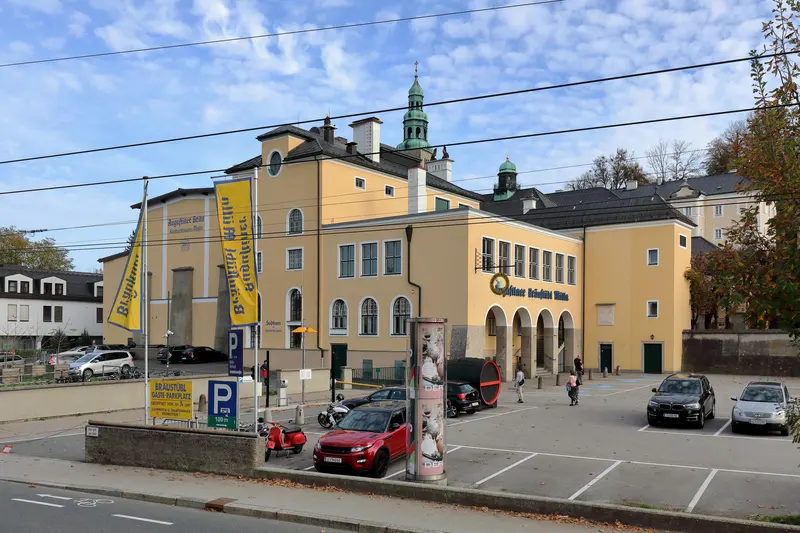
With a third day you have room to slow down or add depth. A good cold-weather option is a museum-and-café day: the Salzburg Museum for the city's story, Haus der Natur if you have children needing to burn energy indoors, and a long lunch somewhere with a tiled stove. Alternatively, give the day to the season itself — a snowy walk up the Mönchsberg (take the lift if the paths are slick), the Museum der Moderne for art and a warm panorama café, and a slow descent back into the lanes for dinner and a beer at the Augustiner Bräustübl, which pours from wooden barrels regardless of weather.
Be honest with yourself about Alpine day trips in winter. Hallstatt and the Salzkammergut lakes are beautiful under snow but run shortened timetables, and short daylight plus icy conditions can turn a relaxed outing into a rushed one; the Untersberg cable car and similar high-mountain trips may close for weather or maintenance. None of this is a reason not to go — it is a reason to check conditions, transport schedules and opening status the day before, and to keep a warm indoor fallback in your pocket. The lakes will still be there; a frostbitten afternoon is not worth forcing.
However you arrange the days, let winter set the rhythm: outdoors when the sun is up, indoors and candlelit when it isn't, and cake somewhere in between. That is not a compromise on the romance of Salzburg. It is the romance of Salzburg.

Related guides

Salzburg Itineraries
Ready-made Salzburg trip plans for one to four days, weekends, couples, families, music lovers, Festival-goers and Christmas-market visitors — each built outward from the river so you walk smart and never backtrack.
Read guide
Salzburg in January
January in Salzburg — deep-winter quiet, Mozart Week, snow on the fortress, cosy coffeehouses, the year's best hotel value and what to plan around the cold and short days.
Read guide
Salzburg Christmas markets
A guide to Salzburg's Advent markets — the historic Christkindlmarkt on Domplatz and Residenzplatz, Hellbrunn, Mirabellplatz, the Sternadvent and more, with timing, food, crowds and hotel advice.
Read guideMore in Itineraries
6
A Weekend in Salzburg
A Friday-to-Sunday plan for Salzburg with hotel-area logic, concert timing, the best viewpoints, where to eat and a soft day-trip choice for Sunday.
Read guide
Four Days in Salzburg
A slower four-day Salzburg plan that adds museums, quieter neighbourhoods, a Sound of Music morning and two day-trip options to the classic city core — paced for travellers who want to live in the city rather than sprint through it.
Read guide
Luxury Salzburg Itinerary
A high-end three-day Salzburg plan built around grand hotels, private guides, fine dining, a chauffeured lake day and concert nights — the city at its most unhurried and elegant, with everything booked ahead.
Read guide
Mozart & Music Itinerary
A music-led day through Salzburg — both Mozart houses, the cathedral and abbey where he played, the Mozarteum and Marionette Theater, and an evening concert chosen by setting, not just programme.
Read guide
One Day in Salzburg
A realistic, walkable one-day route through Salzburg — the Old Town squares, the fortress, a Mozart sight, Getreidegasse and Mirabell at golden hour — paced so you actually enjoy it rather than sprint.
Read guide
Salzburg Christmas Market Itinerary
A festive Salzburg plan for the Advent season — the Christkindlmarkt on the cathedral squares, smaller side markets, Advent music, warm coffeehouses, a candlelit Hellbrunn evening and the best floodlit viewpoints.
Read guide