Two Days in Salzburg
A balanced 48-hour Salzburg plan: the left-bank Old Town and fortress on day one, the right-bank gardens, Mozart and a Hellbrunn or Sound of Music afternoon on day two — with proper coffee and dinner breaks built in.

Photo: Patrick Langwallner / Unsplash · Unsplash License
- ✓Two days split cleanly by river bank: the left-bank stage on day one, the right bank and an excursion on day two.
- ✓Day one covers the squares, the cathedral, St Peter's and the fortress, ending with a beer hall or concert.
- ✓Day two adds Mirabell, a Mozart house, and your choice of Hellbrunn's trick fountains or a Sound of Music loop.
- ✓Hellbrunn and the Sound of Music gazebo are an easy car-free add-on on city bus 25.
- ✓48 hours is the sweet spot for a first Salzburg trip — enough to see the essentials and still sit down.
Why two days is the Salzburg sweet spot
If you can give Salzburg two days, you get the city without the rush. The first day handles the dense left-bank core — the squares, the cathedral, St Peter's and the fortress — that a single-day visitor sprints through. The second day crosses the river to the gardens and the Mozart houses, then pushes out to one genuinely worthwhile excursion: the trick fountains and gazebo at Hellbrunn, or a Sound of Music loop. Because everything clusters by bank, you barely backtrack, and you keep room for the long coffeehouse breaks that are half the point of being here.
The plan below is a planning sketch rather than a strict timetable. Treat every opening hour, ticket price and bus route as something to confirm on the day — verify locally rather than trust a fixed schedule. If you only have a single day, drop the day-two excursion; if you have a third, the obvious next move is a lake or Bavaria day trip from the itineraries hub.
Day one, morning — the squares and St Peter's
Start where the city is grandest. Domplatz sits under the white marble facade of Salzburg Cathedral, where Mozart was baptised and later served as court organist; step inside, then walk through to Residenzplatz and its enormous Residenzbrunnen, the largest Baroque fountain north of the Alps. Mozartplatz, with the composer's statue, completes the ceremonial triangle. If you want a museum-grade hour, the DomQuartier links the cathedral, the Residenz state rooms and a terrace walk on one ticket.
Then slip into St Peter's, where the abbey church, the rock-cut catacombs and the cemetery against the Mönchsberg cliff make up one of the most atmospheric quarters in Salzburg. The ancient bakery beside it still bakes in a wood-fired oven. This whole morning is largely free, leaves you at the foot of the fortress hill, and sets the Baroque tone for the rest of the trip.


Day one, afternoon and evening — fortress, then a beer hall
Take the Festungsbahn funicular up to Hohensalzburg, the hilltop castle begun in 1077 and never taken by force — one of the largest fully preserved fortresses in Central Europe. The state rooms, the fortress museums and the Reckturm viewpoint reward an hour or more, and the ramparts give the definitive panorama over the domes, the river and the Untersberg. Ride up and walk down for the classic compromise, and check whether your Salzburg Card already covers the funicular and admission before paying separately.
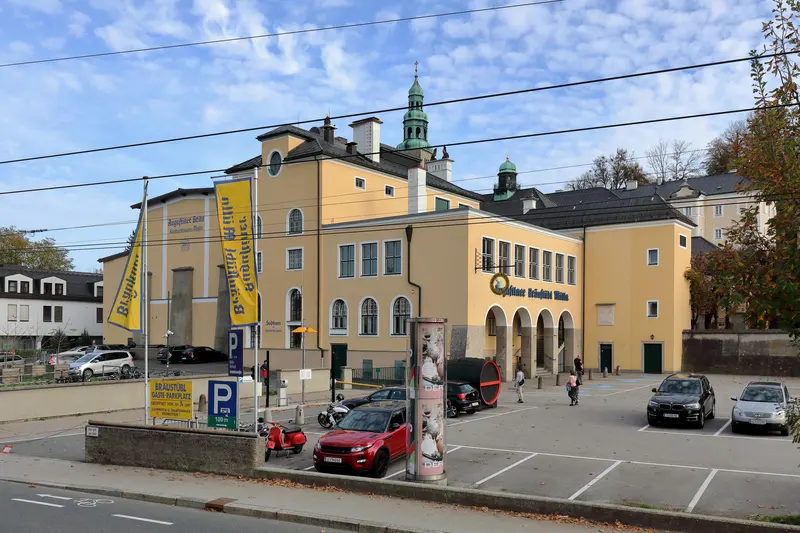
For the evening, lean into the local rituals. The Augustiner beer hall pours straight from wooden barrels under chestnut trees, the historic cellars and Stiftskulinarium serve hearty Austrian classics, and a fortress or Mirabell concert turns the night elegant if you'd rather sit and listen. Whatever you choose, this is the day to end slowly — you have an excursion tomorrow.
- Funicular up to Hohensalzburg; about an hour inside for the rooms, museums and the Reckturm view.
- Confirm Salzburg Card inclusion for the funicular and admission before buying separately — verify terms.
- Evening: a beer hall or cellar, or an early fortress / Mirabell concert.
- Book a Festival-season dinner ahead; tables tighten fast in late July and August.


Day two, morning — Getreidegasse, Mozart and Mirabell
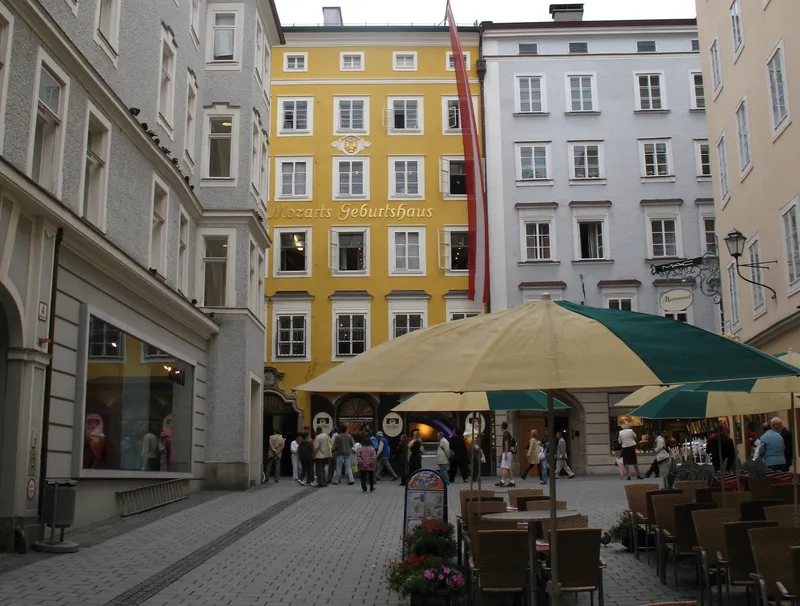
Begin day two with the lane everyone photographs: Getreidegasse, the medieval canyon of wrought-iron guild signs, with Mozart's Birthplace in the bright yellow house at No. 9 — a museum since 1880 and the place to put the city's musical obsession in context. If you want the fuller Mozart story, the later family home, the Mozart Residence on Makartplatz across the river, completes the picture and is usually quieter than the Birthplace.
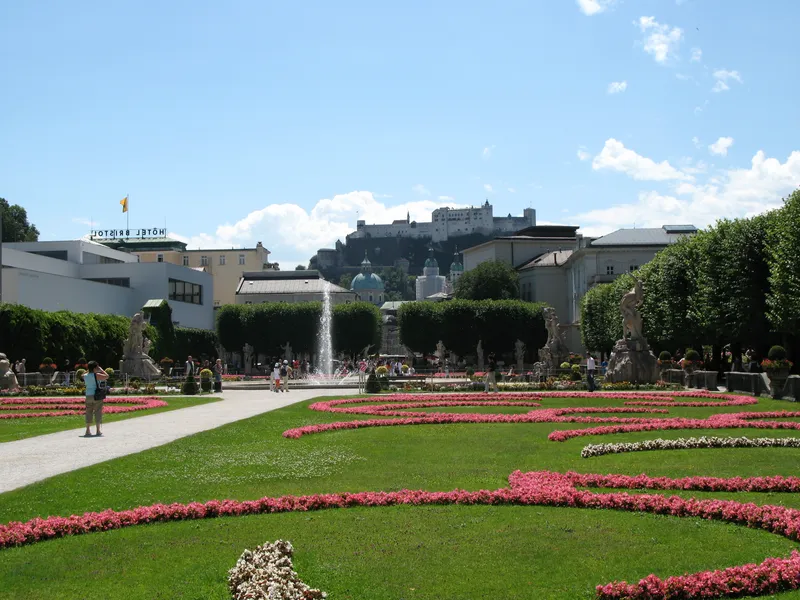
Then cross — or simply walk up the right bank — to Mirabell Gardens. The formal Baroque parterre points its central axis straight at the fortress, the Pegasus Fountain and the terraced 'Do-Re-Mi' steps are free to enjoy, and the Marble Hall inside the palace hosts intimate concerts. Mornings here are quieter than afternoons, so if you want the parterre near-empty, come early; otherwise save it for the golden light when you loop back later.


Day two, afternoon — Hellbrunn or Sound of Music
Now choose your excursion. The family-friendly, broadly-appealing option is Hellbrunn, the playful Baroque pleasure villa whose seasonal trick fountains soak unsuspecting guests for laughs, with a free park and the Sound of Music gazebo in its grounds. City bus 25 links the centre toward Hellbrunn, making this an easy car-free afternoon; the trick fountains run only in the warmer months, so confirm the season before you set out.
The film-lover's alternative is a Sound of Music loop: Mirabell you have already done, so push on to Nonnberg Abbey — the one genuinely real location, a working convent on the fortress shoulder — and the Leopoldskron lake view, photographed from the public path rather than the private hotel. Either choice rounds the trip out without overstuffing the day. End back in the Old Town for a final dinner and the fortress lit against the dusk.
- Hellbrunn: trick fountains (seasonal — verify dates), free park and the gazebo; city bus 25.
- Sound of Music: Nonnberg Abbey (respect the working convent) and the Leopoldskron lake view from public ground.
- Don't try to do both well in one afternoon — pick the one that fits your group.
- Leave the last evening loose for dinner and a riverside walk.

Where to eat and drink across the two days
Two days gives you four or five meals to play with, and Salzburg's food traditions are distinctive enough to plan around rather than leave to chance. For lunch on day one, the cellars and courtyards of the Old Town keep you close to the squares — St Peter Stiftskulinarium, tucked inside the abbey walls and tracing its history back more than a thousand years, is the atmospheric splurge, while the stalls and counters around the Universitätsplatz Grünmarkt do an honest, quick bite. Keep day-one dinner local: the Augustiner Bräustübl in Mülln, a monastery beer hall where the beer is drawn straight from wooden barrels into stone steins beneath chestnut trees, is the quintessential Salzburg evening, relaxed and inexpensive.
On day two, build in the gentler rituals. A proper coffeehouse hour is non-negotiable: Café Tomaselli on Alter Markt has been trading since the early eighteenth century, and the drill is a Melange, a slice of cake chosen from the tray a waiter carries to the table, and no hurry at all. Try the local sweets once — a Salzburger Nockerl, the soufflé shaped into three peaks to echo the city's hills, is best shared because it arrives enormous, and a genuine Original Mozartkugel comes from Fürst, the confectioner that invented it in 1890. For a final dinner, a candlelit cellar or a river-view table sends the trip off well; reserve anywhere notable in Festival season and over Advent weekends, when the city's tables fill weeks ahead.
- Day-one dinner: the Augustiner Bräustübl beer hall in Mülln — barrel-poured, relaxed, inexpensive.
- Lunch close to the sights: St Peter Stiftskulinarium, or the Grünmarkt stalls by the university square.
- Day-two coffee ritual: a Melange and cake at Café Tomaselli on Alter Markt.
- Try once: a shared Salzburger Nockerl and an Original Mozartkugel from Fürst.

Tickets, the Salzburg Card and getting around
Two days is exactly the trip where the Salzburg Card can pay for itself, so it is worth a moment's maths before you arrive. The card (sold in 24-, 48- and 72-hour versions) bundles one-time free admission to most of the headline sights — the fortress and its funicular, the Mozart museums, the DomQuartier, Hellbrunn, the Salzach river cruise — together with free use of the city's public transport. If your two days hit several of those paid sights, the 48-hour card usually comes out ahead of buying separately; if you plan a more free-and-easy trip of squares, churches and gardens, you may not need it. Always check current inclusions and prices rather than assume, since terms are reviewed periodically.
Getting around is simple: the Old Town is pedestrianised and almost everything on this plan is within a fifteen-minute walk, so the only transport you truly need is the Festungsbahn funicular up to the fortress and city bus 25 out to Hellbrunn. If you are staying overnight in Salzburg, ask your hotel about the Guest Mobility Ticket introduced in 2025, which covers regional public transport for registered guests and is separate from the Salzburg Card — handy if your day-two excursion or a possible third-day trip uses regional buses or trains. Confirm the current scheme locally, as these guest benefits evolve.


Adjusting the 48 hours for your trip
The two-day frame bends easily to who you are and when you come. Families should lean day two firmly toward Hellbrunn's trick fountains and consider swapping a museum hour for the Haus der Natur science museum or the zoo, and use the funicular rather than the walk up to the fortress. Couples can tilt the evenings toward a Mirabell concert and a candlelit dinner, and trade the Hellbrunn afternoon for a slow river walk and a Mönchsberg sunset. Music lovers might give the day-two afternoon to the Mozart Residence and a second concert instead of the excursion.
Season matters just as much. In high summer the Salzburg Festival fills late July and August with opera and drama and packs the squares — if you are here then, build a Festival evening into day one and book everything far ahead. Over Advent, from mid-November, the Christkindlmarkt on Domplatz and Residenzplatz reshapes the trip around mulled wine and craft stalls under the floodlit cathedral, and a December plan can trade the Hellbrunn afternoon (the trick fountains close for winter) for a market crawl and an Advent concert. Whatever the season, confirm the trick-fountain dates, Festival closures and opening hours before you lock the plan, and carry a layer for the Alpine evening chill.


At a glance: running 48 hours
A planning sketch, not a timetable. Confirm cathedral, fortress, museum and Hellbrunn opening hours, the trick-fountain season, bus 25 routing and any Festival closures on the day — verify locally rather than rely on fixed times.
- Day 1 AM: Domplatz → Cathedral → Residenzplatz → Mozartplatz → St Peter's.
- Day 1 PM/eve: funicular to Hohensalzburg → beer hall, cellar or concert.
- Day 2 AM: Getreidegasse → Mozart's Birthplace → Mirabell Gardens.
- Day 2 PM: Hellbrunn (fountains and gazebo) OR a Sound of Music loop → final Old Town dinner.
- Cost: squares, churches and gardens are free; fortress, museums, Hellbrunn and concerts are the outlays — verify prices.
- Pace: full but unhurried; mostly walkable with one funicular and one bus.
Related guides

Salzburg Itineraries
Ready-made Salzburg trip plans for one to four days, weekends, couples, families, music lovers, Festival-goers and Christmas-market visitors — each built outward from the river so you walk smart and never backtrack.
Read guide
One Day in Salzburg
A realistic, walkable one-day route through Salzburg — the Old Town squares, the fortress, a Mozart sight, Getreidegasse and Mirabell at golden hour — paced so you actually enjoy it rather than sprint.
Read guide
Three Days in Salzburg
A three-day Salzburg plan that covers the Old Town and fortress, the right-bank gardens and Mozart, a Hellbrunn or Sound of Music afternoon and one full day trip to the Salzkammergut lakes or Bavaria — with an evening concert to seal it.
Read guideMore in Itineraries
6
A Weekend in Salzburg
A Friday-to-Sunday plan for Salzburg with hotel-area logic, concert timing, the best viewpoints, where to eat and a soft day-trip choice for Sunday.
Read guide
Four Days in Salzburg
A slower four-day Salzburg plan that adds museums, quieter neighbourhoods, a Sound of Music morning and two day-trip options to the classic city core — paced for travellers who want to live in the city rather than sprint through it.
Read guide
Luxury Salzburg Itinerary
A high-end three-day Salzburg plan built around grand hotels, private guides, fine dining, a chauffeured lake day and concert nights — the city at its most unhurried and elegant, with everything booked ahead.
Read guide
Mozart & Music Itinerary
A music-led day through Salzburg — both Mozart houses, the cathedral and abbey where he played, the Mozarteum and Marionette Theater, and an evening concert chosen by setting, not just programme.
Read guide
Salzburg Christmas Market Itinerary
A festive Salzburg plan for the Advent season — the Christkindlmarkt on the cathedral squares, smaller side markets, Advent music, warm coffeehouses, a candlelit Hellbrunn evening and the best floodlit viewpoints.
Read guide
Salzburg Festival Itinerary
How to build a trip around the Salzburg Festival — booking ahead, shaping the day around performances, balancing opera and drama with sightseeing, choosing meals and a hotel, and pacing in rest so the culture lasts.
Read guide